Network Engineer Resume Keywords: Cisco, Routing & Cloud Networking
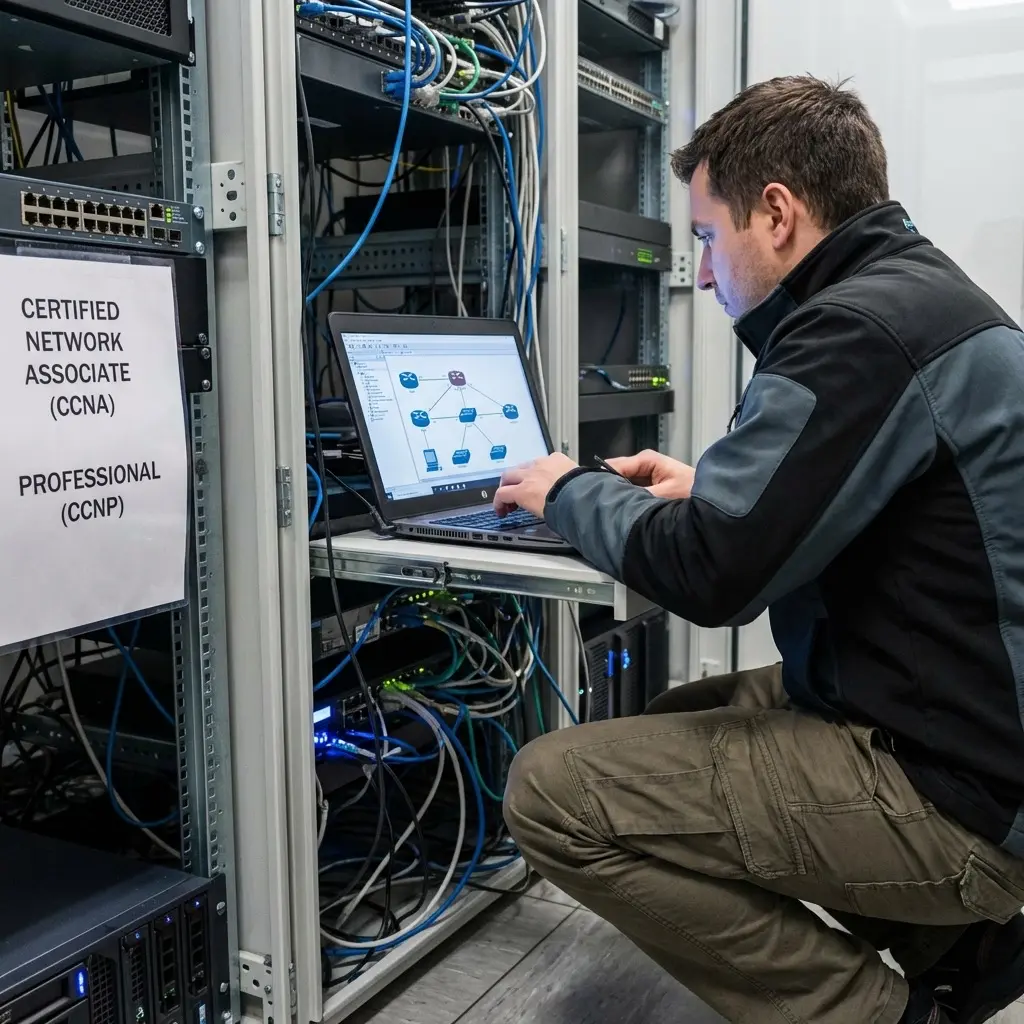
Network engineering requires vendor-specific and protocol knowledge. The keywords you choose determine whether your resume reaches a hiring manager or disappears into an ATS rejection pile.
Unlike generalist IT roles, network engineering positions filter for exact vendor names, protocol acronyms, and certification titles. A recruiter searching for "BGP" will not find your resume if you only wrote "routing protocols." A job posting that specifies "Cisco Nexus" will not match "data center switches." Precision matters more in networking than in almost any other technical discipline.
This guide gives you the complete network engineer keyword list organized by technology domain and experience level. For the full system on converting these keywords into measurable impact statements, see our Professional Impact Dictionary. Every keyword below becomes more powerful when paired with a quantified result.
Networking Vendors
Hardware Vendors
- Cisco
- Juniper
- Arista
- HPE/Aruba
- Dell Networking
- Fortinet
- Palo Alto Networks
- F5
Product Lines
- Cisco Catalyst
- Cisco Nexus
- Cisco ASA
- Cisco Meraki
- Juniper SRX
- Juniper EX
- Arista switches
Routing Protocols
Routing
- BGP
- OSPF
- EIGRP
- IS-IS
- RIP
- Static routing
- Policy-based routing
- Route redistribution
Switching
- VLANs
- Trunking
- STP (Spanning Tree Protocol)
- RSTP
- MSTP
- VTP
- EtherChannel
- LACP
- Port-channel
Network Technologies
Core Technologies
- TCP/IP
- IPv4
- IPv6
- DNS
- DHCP
- NAT
- PAT
- ACLs
- QoS
WAN Technologies
- MPLS
- SD-WAN
- VPN
- IPsec
- SSL VPN
- Site-to-site VPN
- Remote access VPN
- GRE tunnels
If you are building a complete network engineer resume beyond just keywords, layout and structure matter as much as the terms you include. The best networking resumes pair vendor-specific terminology with measurable outcomes like uptime percentages and latency reductions.
Wireless
- Wireless networking
- Wi-Fi
- 802.11ax (Wi-Fi 6)
- Wireless controllers
- Access points
- Cisco Wireless
- Aruba Wireless
Security
Firewalls
- Firewalls
- Next-gen firewalls
- Cisco ASA
- Palo Alto
- Fortinet FortiGate
- Check Point
- pfSense
- iptables
Security Concepts
- Network security
- IDS/IPS
- DDoS protection
- Zero Trust
- Network segmentation
- Micro-segmentation
- 802.1X
- RADIUS
- TACACS+
Cloud Networking
AWS Networking
- AWS VPC
- Subnets
- Route tables
- Internet Gateway
- NAT Gateway
- Transit Gateway
- VPN Gateway
- Direct Connect
- Security Groups
- NACLs
Azure Networking
- Azure VNet
- Azure VPN Gateway
- ExpressRoute
- Azure Firewall
- Network Security Groups
- Azure Load Balancer
- Application Gateway
GCP Networking
- GCP VPC
- Cloud VPN
- Cloud Interconnect
- Cloud NAT
- Cloud Load Balancing
Network engineers moving into cloud roles share significant vocabulary with cloud architects. If you are targeting hybrid or multi-cloud positions, identify terms that overlap with your on-premises experience and strengthen your cloud networking narrative with provider-specific keywords.
Load Balancing
- Load balancing
- F5 BIG-IP
- Citrix ADC
- HAProxy
- NGINX
- AWS ALB/NLB
- Azure Load Balancer
- Layer 4/Layer 7
Network Monitoring
Tools
- Wireshark
- SolarWinds
- Nagios
- PRTG
- Zabbix
- Cisco DNA Center
- ThousandEyes
- NetFlow
- SNMP
Concepts
- Network monitoring
- Traffic analysis
- Packet capture
- Performance monitoring
- Bandwidth monitoring
- Troubleshooting
Automation
Tools
- Ansible
- Python
- Terraform
- Netmiko
- NAPALM
- Nornir
Concepts
- Network automation
- Infrastructure as Code
- CI/CD for networking
- Configuration management
- NetDevOps
Certifications
Cisco
- CCNA
- CCNP Enterprise
- CCNP Security
- CCIE
Other
- Juniper JNCIA/JNCIS
- AWS Advanced Networking
- Azure Network Engineer
- Palo Alto PCNSE
- CompTIA Network+
Keywords by Experience Level
Keyword expectations change significantly with seniority. Hiring managers scan for different signals depending on the level they are filling, and the wrong keywords for your experience level can actually hurt your application.
Junior Network Engineer (0-2 Years)
Focus on foundational protocols, hands-on lab exposure, and eagerness to learn operational discipline:
- Network troubleshooting
- CCNA
- TCP/IP fundamentals
- VLAN configuration
- Basic routing (OSPF, static routes)
- Switch configuration
- Cable management
- Network documentation
- Help desk escalation
- Wireshark packet analysis
At this level, demonstrating you understand the OSI model and can configure a basic switched and routed network matters more than claiming you designed an enterprise WAN. Use phrases like "configured VLANs across 50 access switches" or "assisted with OSPF migration."
Mid-Level Network Engineer (3-5 Years)
Mid-level engineers own network segments. Your keywords should reflect design input and measurable impact:
- BGP peering
- OSPF multi-area design
- Firewall rule management
- SD-WAN deployment
- VPN architecture
- Network capacity planning
- Wireless site surveys
- Change management
- Vendor evaluation
- Performance optimization
Quantify everything at this stage. "Reduced network downtime from 99.9% to 99.99% across 12 branch locations" is the kind of bullet that passes both ATS screening and hiring manager review.
Senior Network Engineer (6-9 Years)
Senior engineers design and set standards. Keywords should reflect architectural authority:
- Network architecture
- High availability design
- Disaster recovery networking
- Multi-site WAN design
- Data center fabric (VXLAN, EVPN)
- Network segmentation strategy
- Automation framework design
- Vendor relationship management
- Budget planning
- Team mentoring
Principal/Staff Network Engineer (10+ Years)
At this level, add strategic and leadership keywords:
- Enterprise network strategy
- Technology roadmap
- Cross-functional leadership
- Network transformation
- Cloud migration planning
- Standards definition
- Architecture review board
- Executive communication
- RFP development
- Total cost of ownership analysis
At the principal level, your resume should read as a story of organizational impact. "Defined enterprise network strategy supporting 15,000 users across 40 global sites" signals the scope that staff-level roles require.
Network Engineering Specializations
Network engineering is not monolithic. Job descriptions cluster around four major specializations, and each one prioritizes different keywords. Tailor your resume to the specialization that matches the posting.
Security-Focused Network Engineering
Security-focused roles emphasize perimeter defense, segmentation, and compliance. Lead with firewall vendors (Palo Alto, Fortinet, Check Point), intrusion detection (IDS/IPS), Zero Trust architecture, and 802.1X/RADIUS/TACACS+. If the role mentions compliance frameworks like PCI DSS or HIPAA, mirror those exact terms. Security networking keywords overlap heavily with the systems administrator keyword space, particularly around access control and infrastructure hardening.
Cloud-Focused Network Engineering
Cloud networking roles prioritize provider-specific terminology. AWS positions want "VPC," "Transit Gateway," "Direct Connect," and "Security Groups." Azure roles scan for "VNet," "ExpressRoute," and "Network Security Groups." Include hybrid connectivity terms like "site-to-site VPN" and "SD-WAN integration" if you bridge on-premises and cloud environments. Terraform and CloudFormation for network infrastructure as code are increasingly expected.
Wireless-Focused Network Engineering
Wireless specialists should lead with 802.11ax (Wi-Fi 6), wireless controllers, site survey tools (Ekahau, AirMagnet), and RF engineering concepts. Include vendor-specific terms like Cisco Wireless LAN Controller, Aruba Central, or Meraki dashboard. Capacity planning for high-density environments (stadiums, hospitals, warehouses) is a strong differentiator. Add "WLAN design," "heat mapping," and "spectrum analysis" to signal depth beyond basic AP deployment.
Automation-Focused Network Engineering
NetDevOps roles scan for Python, Ansible, Terraform, and network-specific libraries (Netmiko, NAPALM, Nornir). Include "CI/CD for networking," "configuration drift detection," "infrastructure as code," and "API-driven network management." If you have built custom automation that reduced manual configuration time, that is your highest-impact bullet. YANG models, NETCONF, and RESTCONF are increasingly expected for automation-focused positions.
Traditional vs Cloud Networking Keywords
The networking industry is in the middle of a vocabulary shift. Resumes that only use traditional terms risk looking outdated, while resumes that only use cloud terms may miss ATS filters for hybrid environments. Understanding both vocabularies and when to deploy each one gives you a significant advantage.
Traditional networking keywords center on physical infrastructure: "Cisco Catalyst," "patch panel," "rack-and-stack," "console cable," "OSPF area design," "STP root bridge," "port-channel." These terms signal hands-on data center and campus network experience. They remain critical for roles at enterprises with on-premises infrastructure, ISPs, managed service providers, and government agencies.
Cloud networking keywords describe virtual constructs: "VPC peering," "Transit Gateway," "route tables," "security groups," "network ACLs," "load balancer target groups," "private endpoints." These terms dominate job postings at cloud-native companies, SaaS providers, and organizations deep into cloud migration.
The strongest network engineer resumes bridge both worlds. A bullet like "Migrated 200-node OSPF campus network to AWS Transit Gateway architecture, reducing WAN costs by 40% while maintaining sub-5ms latency SLAs" demonstrates fluency in both vocabularies. If you have experience spanning physical and cloud infrastructure, structure your resume to show the progression. Hiring managers at hybrid organizations actively seek engineers who can translate between the two paradigms.
Quick Reference: Top 50 Network Keywords
- Cisco
- Routing
- Switching
- BGP
- OSPF
- VLANs
- Firewall
- VPN
- TCP/IP
- DNS
- DHCP
- Load balancing
- AWS VPC
- Azure networking
- SD-WAN
- MPLS
- Wireless
- Network security
- Juniper
- Palo Alto
- F5
- IPv4/IPv6
- Subnetting
- NAT
- QoS
- STP
- EtherChannel
- ACLs
- IPsec
- SSL VPN
- CCNA
- CCNP
- Wireshark
- SolarWinds
- SNMP
- NetFlow
- Network monitoring
- Troubleshooting
- Automation
- Ansible
- Python
- Terraform
- IDS/IPS
- Zero Trust
- Cloud networking
- Transit Gateway
- Direct Connect
- ExpressRoute
- Documentation
- Capacity planning
Build your ATS-optimized network engineer resume with the right routing and cloud keywords
Keyword Strategy
Match the Environment
Cisco shop? Lead with Cisco certs and products. Cloud-first? Emphasize AWS/Azure networking. The first rule of networking keyword strategy is to mirror the job posting's vendor stack exactly. A resume optimized for a Juniper environment will underperform at a Cisco-heavy organization, even if the underlying skills are identical.
Include Automation
Modern network engineers automate. Show Python, Ansible, Terraform skills. Even if automation is not the primary focus of the role, including NetDevOps keywords signals that you are not stuck in a CLI-only mindset. A bullet like "Automated VLAN provisioning across 300 switches using Ansible playbooks, reducing deployment time from 4 hours to 15 minutes" demonstrates both the skill and the impact.
Certifications Matter
Network engineering is certification-heavy. List CCNA/CCNP prominently. For cloud networking roles, add AWS Advanced Networking Specialty or Azure Network Engineer Associate. For security-focused roles, include CCNP Security or Palo Alto PCNSE. Place your most relevant certification in your resume summary line where ATS systems scan first.
Place Keywords in Context
Keyword lists in a skills section help with ATS, but keywords embedded in achievement bullets help with humans. Do both. A skills section gets you past the scanner. Bullets like "Designed and deployed BGP peering with 3 ISPs across 2 data centers, achieving 99.99% uptime for 500 Gbps aggregate throughput" get you past the hiring manager. For every major keyword you list, aim to reference it at least once in a quantified accomplishment.
Tailor Per Job Description
Read the job posting three times before submitting. Highlight every technical term, vendor name, and protocol. Your resume should mirror at least 70% of those terms if you have the experience. Do not keyword-stuff terms you cannot discuss in an interview, but do not leave matching skills unlabeled either. An SD-WAN role wants "Viptela," "Cisco SD-WAN," "overlay routing," and "application-aware routing" — not just "WAN optimization."