Panel Interview Preparation: How to Impress Multiple Interviewers

Why Panel Interviews Require Different Preparation
In my 15 years placing executives at Fortune 500 companies, I've seen countless candidates who excel in one-on-one interviews completely falter when facing a panel. The dynamic shifts dramatically when multiple evaluators are watching simultaneously, and candidates who haven't prepared for this specific format often underperform.
Panel interviews are increasingly common across all levels, not just executive roles. Companies use them to accelerate hiring timelines, reduce bias through multiple perspectives, and evaluate how candidates handle pressure. Understanding this format gives you a significant advantage over candidates preparing for standard interviews.
The stakes are higher too: you're making one impression that gets evaluated by multiple people with different priorities. There's no second chance to correct a weak answer—everyone in the room heard it. If you want to approach this with confidence, combining panel-specific strategies with solid general interview preparation will set you up for success. For comprehensive strategies on interview preparation, our career pitch mastery guide covers the complete approach.
And before you even get to the panel, your resume needs to stand out to earn that interview.
What to Expect in a Panel Interview
The Typical Panel Composition
Most panels include 3-5 interviewers representing different functions or perspectives:
Understanding who's in the room helps you tailor responses. A technical answer that impresses the peer might bore the VP—and vice versa.
The Interview Flow
Panel interviews typically follow a more structured format than one-on-one conversations:
Expect the interview to last 45-90 minutes. The formal structure leaves less room for casual rapport-building, so every answer needs to count. Having a strong resume is what gets you here in the first place.
Pre-Interview Research: Know Your Audience
Research Each Panelist
Once you know who's interviewing you (always ask if they don't tell you), spend time understanding each person:
Why This Matters:
Understanding each panelist lets you:
- Anticipate what types of questions they'll ask
- Prepare examples that resonate with their specific concerns
- Ask relevant questions that demonstrate respect for their expertise
- Build individual rapport within the group context
According to Harvard Business Review, interviewers form strong impressions within the first few minutes. Knowing your audience lets you make those minutes count.
Map Questions to Panelists
Based on your research, predict what each person will focus on:
| Role | Likely Focus Areas |
|---|---|
| Hiring Manager | Day-to-day skills, management style, specific experience |
| HR | Culture fit, career motivations, compensation, red flags |
| Technical Lead | Hard skills, problem-solving approach, technical depth |
| Senior Executive | Strategic thinking, leadership potential, long-term trajectory |
| Peer | Collaboration style, team dynamics, work habits |
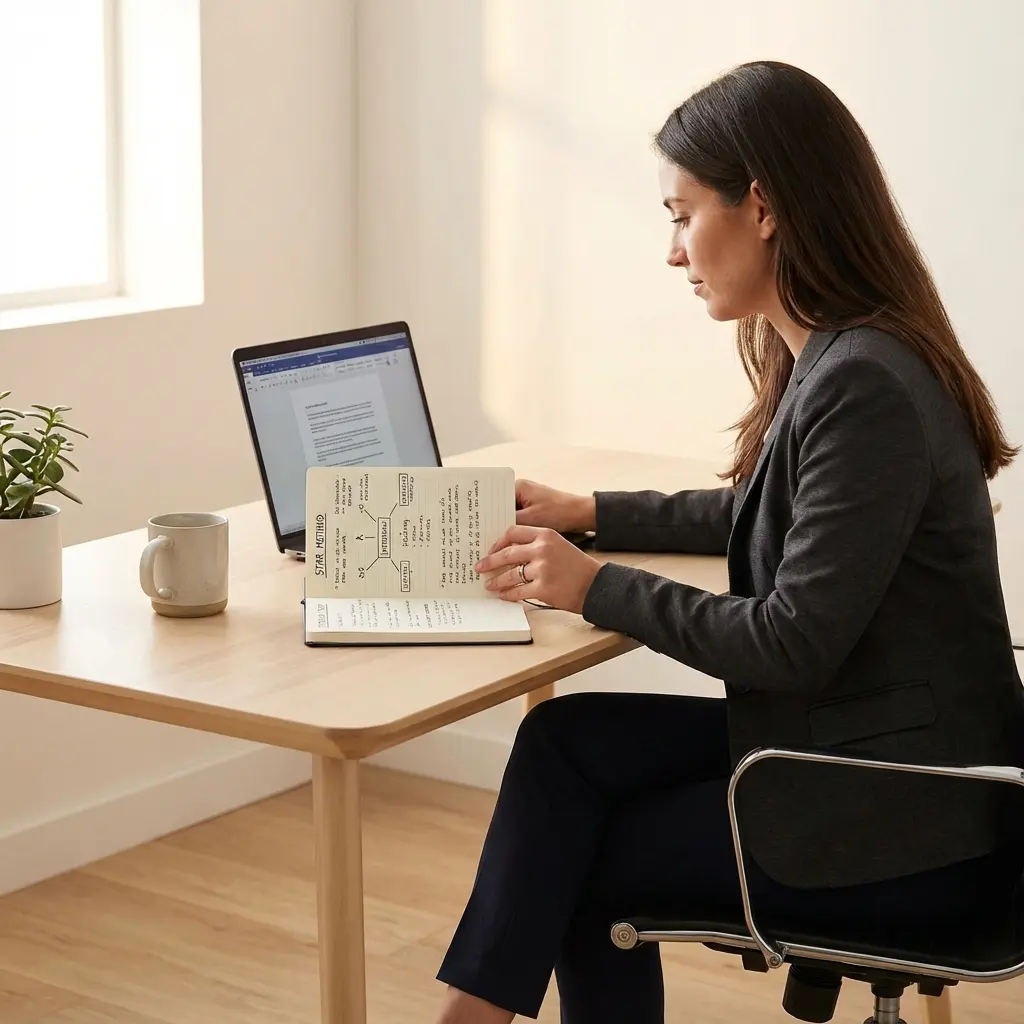
Prepare 2-3 STAR stories tailored to each focus area. The more relevant your examples feel to each evaluator, the stronger your overall impression.
Strategies for Engaging Multiple Interviewers
The Eye Contact Challenge
One of the biggest mistakes candidates make is locking onto whoever asked the question. This makes other panelists feel ignored and disengaged.
The Right Approach:
- Begin with the questioner: Make initial eye contact with whoever asked
- Scan naturally: As you elaborate, include other panelists with brief eye contact (2-3 seconds each)
- Return to close: End your answer looking at the original questioner
- For long answers: Think of it as a conversation with a group, not a monologue to one person
Practice this in front of a mirror or with friends positioned around you. It should feel natural, not mechanical.
Addressing the Whole Room
Your answers should satisfy multiple perspectives simultaneously. This requires thinking beyond just "what they asked" to "what everyone needs to hear."
Example:
Question from hiring manager: "Tell me about your experience with project management."
Narrow Answer (only satisfies the questioner): "I managed a team of five on a software implementation project."
Broad Answer (satisfies multiple panelists): "I led a cross-functional team of five through a six-month software implementation. We faced resistance from the sales team initially, so I spent time understanding their concerns and designed the rollout to address their workflow needs. We delivered two weeks early and under budget, and adoption rates hit 92% within the first month. I'm happy to go deeper on the technical implementation or the change management approach—whatever would be most useful."
The broad answer addresses the hiring manager's question while signaling technical competence to the technical lead, stakeholder management to the executive, and collaboration skills to the peer.
Managing Uneven Panel Dynamics
Sometimes panels have dominant personalities who monopolize questions, while others stay quiet. Handle this gracefully:
The quiet evaluator often has significant influence on the final decision. Make sure they feel as engaged as anyone else.
Handling Common Panel Interview Scenarios
Scenario 1: Rapid-Fire Questions
Sometimes panelists fire questions quickly, leaving little time to think. This tests how you perform under pressure.
Strategy:
- It's okay to pause briefly (3-5 seconds) before answering
- If overwhelmed, say: "Let me take a moment to give you a thoughtful answer"
- Keep answers concise when the pace is fast—you can elaborate if they want more
- Don't sacrifice quality for speed
Scenario 2: Conflicting Perspectives
Panel members sometimes disagree with each other during the interview. This can feel awkward, but it's actually an opportunity.
Strategy:
- Don't take sides or critique either position
- Acknowledge both perspectives: "Those are both valid considerations..."
- If asked to weigh in, be diplomatic: "In my experience, the right approach depends on context..."
- View it as insight into team dynamics you'll navigate if hired
Scenario 3: The Silent Evaluator
One panelist watches, takes notes, but never asks questions. This can be unnerving.
Strategy:
- Make eye contact naturally, just as with others
- Don't try to force engagement—some evaluators prefer to observe
- They're likely assessing non-verbal cues and overall impression
- If your resume positions you well, trust that your qualifications are already working in your favor
Scenario 4: Technical Deep-Dives
One panelist may take you deep into technical territory while others watch.
Strategy:
- Answer the specialist directly but occasionally check in with others
- If going very deep, briefly note: "I'm happy to get more technical if that's helpful, or keep it higher level for the group"
- Don't pretend expertise you don't have—specialists will see through it
- Show your thought process, not just conclusions
What to Do When You Don't Know the Answer
Panel interviews amplify the pressure of difficult questions because multiple people witness your response. Having a strategy for "I don't know" moments is essential.
Approaches That Work:
Never:
- Try to bluff through with obvious nonsense
- Panic visibly (even if you feel it)
- Apologize excessively for not knowing something
Interviewers respect candidates who handle uncertainty gracefully. Pretending to know everything signals insecurity; acknowledging limits while showing capability signals confidence.
Your Questions for the Panel
The questions you ask reveal as much as your answers. In panel settings, you have an opportunity to engage different people directly.
Questions to Ask Specific Panelists
To the Hiring Manager: "What would success look like in the first 90 days for whoever takes this role?"
To the Cross-Functional Partner: "How would you describe the collaboration between your team and this role currently? Where do you see opportunities to strengthen that?"
To the HR Representative: "What characteristics have you seen in people who thrive in your company culture?"
To Senior Leadership: "What are the biggest challenges you're focused on for this team over the next year?"
To the Peer: "What do you enjoy most about working here? And what took some getting used to?"
Questions to Avoid
Body Language in Panel Interviews
Your non-verbal communication is amplified when multiple people are observing:
Posture:
- Sit upright and engaged, slightly forward
- Position yourself to easily address the full panel (don't favor one side)
- Avoid crossing arms or closed-off positions
Hands:
- Use natural gestures to emphasize points
- Rest hands on the table or in your lap when not gesturing
- Avoid nervous habits like tapping or fidgeting
Face:
- Smile genuinely when appropriate
- Show active listening when panelists speak or ask questions
- Maintain composed expressions even when surprised by questions
Note-Taking:
- It's acceptable to bring a notepad and pen
- Jot brief notes about panelists' names and roles
- Taking notes shows engagement—but don't write so much that you break eye contact excessively
Virtual Panel Interview Considerations
Many panel interviews now happen via video conferencing. This brings unique challenges:
Technical Preparation
Engagement Strategies for Video
Screen Sharing Scenarios
If you need to present or share work:
- Practice screen sharing in advance
- Have materials ready and organized before the interview
- Know keyboard shortcuts to switch between applications smoothly
- Close or hide anything you don't want accidentally visible
Follow-Up After Panel Interviews
Following up after a panel interview requires more effort than a standard interview, but the investment pays off.
Individual Thank-You Notes
Send personalized emails to each panelist within 24 hours. Reference something specific from your conversation with them:
Example:
"Dear [Name],
Thank you for the opportunity to interview for the [Role] position today. I especially appreciated hearing your perspective on [specific topic they raised]. Your point about [detail] reinforced my excitement about contributing to your team.
I was particularly glad to discuss [something relevant to their role]. Please don't hesitate to reach out if you have any additional questions.
Best regards, [Your name]"
If you don't have individual email addresses, send a note to your primary contact asking them to pass along your thanks to the panel, with specific mentions of what you appreciated from each person. To make sure you're presenting yourself consistently, having a well-crafted resume backing you up reinforces the impression you made in person.
Tracking Panelist Details
Before leaving the interview (or immediately after), note:
- Each person's full name and proper spelling
- Their role and department
- One or two specific points they raised
- Any personal details they shared
These notes ensure your follow-up feels genuine and personalized.
Common Panel Interview Mistakes
Mistake 1: Treating It Like a One-on-One
Candidates who only engage with the person asking questions seem unaware of the format. Remember: everyone is evaluating you, not just the questioner.
Mistake 2: Rambling Answers
With more evaluators watching, long-winded answers are quickly noticed. Keep most responses under two minutes. Panel members are silently tracking time and forming impressions about your communication efficiency.
Mistake 3: Ignoring Power Dynamics
In most panels, one person (often the most senior) carries more weight in the final decision. While you should engage everyone, ensure your best examples and most compelling answers are heard clearly by decision-makers.
Mistake 4: Overthinking the Group Dynamic
Some candidates become so focused on the panel format that they lose authenticity. The goal isn't to perform—it's to have a genuine conversation with several people simultaneously. Relax and be yourself.
Mistake 5: Weak Questions at the End
Panels often rush through the question period. Having specific, insightful questions ready—particularly ones directed at different panelists—demonstrates preparation and genuine interest.
Frequently Asked Questions
How do I remember all the panelists' names?
Write them down as introductions happen. When you ask questions, use their names directly: "Sarah, I'd love to hear your perspective on..." This shows respect and helps cement names in your memory.
What if panelists disagree on an answer I give?
Stay neutral and composed. You might say, "I can see both perspectives—in practice, I'd want to understand [context] before deciding which approach fits best." Never side strongly with one panelist against another.
Should I ask the same question to multiple panelists?
Only if you genuinely want varied perspectives on the same topic: "I'd love to hear from both of you on this—how do you see the team's biggest opportunities from your different vantage points?"
How do I handle a panel interview for a promotion at my current company?
The dynamics shift when panelists already know you. Focus on demonstrating growth, articulating vision, and showing that you understand the elevated role's requirements. Avoid being overly casual just because you know them. For more on crafting experience sections that reflect your growth, think about how your resume maps to the promotion you're seeking.
What if I'm asked a question I already answered?
It happens when panelists are focused on their own questions. Answer politely without pointing out the repetition. You might add a new detail or angle to keep it fresh: "Building on what I mentioned earlier, I'd also add that..."
Building Confidence Before the Interview
Panel interviews naturally create more anxiety than one-on-one conversations. Here's how to manage it:
Final Thoughts: Presence Over Perfection
The candidates who win panel interviews aren't necessarily the most qualified—they're the ones who make every evaluator feel engaged, heard, and confident in their abilities. Panel interviews reward presence, not just performance.
Your preparation checklist:
Remember: the panel format is designed to evaluate how you'll work with the team after you're hired. Show them what that collaboration will look like by being thoughtful, inclusive, and genuine in every interaction.
Your next panel interview could be the one that lands your best opportunity yet.