The Hidden Job Market Is Real - Here's How to Find It
The "Hidden Job Market" Is Real: Here's How to Find It
I accepted my current job offer 3 weeks before the position was ever posted publicly.
No, I didn't have insider connections. No, my uncle doesn't work there.
I just knew how to access the hidden job market.
And once you understand the system, it's actually not that hard.
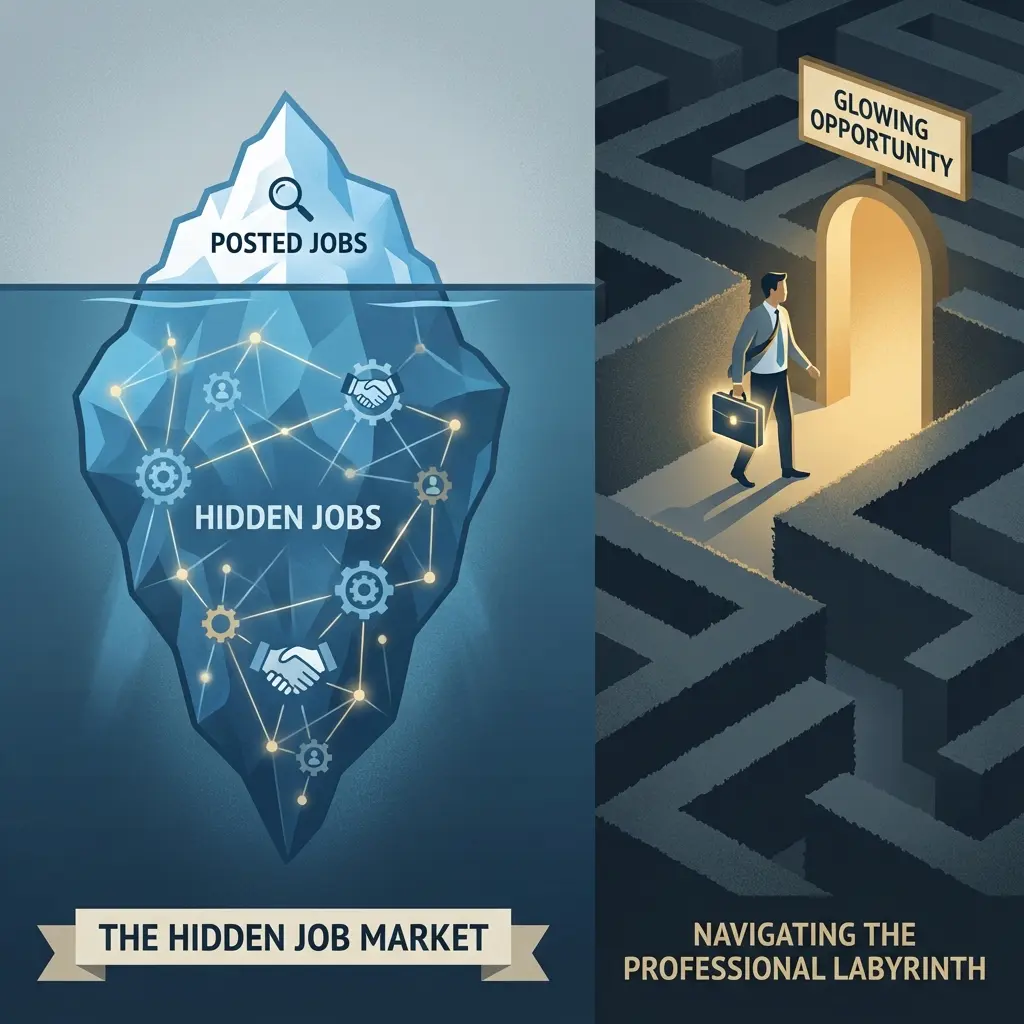
What Is the "Hidden Job Market"?
It's not some secret society. It's just this: 70% of jobs are filled before they're ever posted publicly.
Why?
Because hiring is expensive and risky. Companies prefer to hire people who come recommended or who they've already interacted with.
Think about it from their perspective:
- Posting a job = 200+ applications to sort through
- Internal referral = 1 pre-vetted candidate
Which would you choose?
The 3 Channels of the Hidden Job Market
Channel 1: The "We're Thinking About Hiring" Phase
This is 2-3 months before a job gets posted.
A team is growing. A project is expanding. Someone's about to leave (but hasn't announced it yet).
The hiring manager mentions to a few people: "We might need to bring someone on soon."
How to access it: Be in the room (or Slack channel, or LinkedIn DMs) when these conversations happen.
Channel 2: The "Let's Ask Around First" Phase
This is 2-4 weeks before posting.
The budget is approved. The job description is written. But before posting it publicly, the hiring manager asks their network: "Know anyone good?"
How to access it: Be the person someone thinks of when they ask around.
Channel 3: The "Referral Fast-Track" Phase
This is when the job is posted, but there's already an internal candidate or referral in the pipeline.
The public posting is often just a formality.
How to access it: Get referred by someone already at the company.
My 4-Step System to Access All 3 Channels
I've used this system to land 3 jobs in the last 5 years. Here's exactly what I do:
Step 1: Identify Target Companies (Not Job Postings)
Stop searching for "open positions."
Start with: "What companies am I interested in working for?"
Make a list of 20-30 companies. Use:
- Companies in your industry that are growing
- Companies your friends/former colleagues work at
- Companies whose products you actually use and like
Tool I use: I keep a Notion database with company names, why I'm interested, and key contacts.
Step 2: Find the Hiring Managers (Not HR)
HR posts jobs. Hiring managers make hiring decisions.
For each company, find 2-3 people who:
- Lead teams you'd want to join
- Have job titles 1-2 levels above where you'd be
- Are active on LinkedIn or Twitter
How to find them: LinkedIn search: [Company Name] [Department] Manager
Step 3: Add Value Before Asking for Anything
This is the part most people skip—and why they fail.
Don't send a cold "I'd love to work for you!" message.
Instead, engage with their content:
- Comment on their LinkedIn posts (thoughtfully, not "Great post!")
- Share their articles with your own insights
- Send a relevant article: "Saw this and thought of your recent post about X"
Do this for 2-3 weeks. Build familiarity.
Step 4: The "Informational Coffee Chat" Request
After 2-3 weeks of genuine engagement, send this message:
Hi [Name],

I've been following your work on [specific thing] and really
appreciated your recent post about [topic].

I'm currently exploring opportunities in [field] and would love
to learn more about how you built [team/product/initiative] at
[Company].

Would you be open to a 20-minute coffee chat (virtual or in-person)?

Happy to work around your schedule.

[Your Name]
Success rate: About 40% say yes.
And here's the magic: in that conversation, you'll often hear about roles that aren't posted yet.
What to Ask in the Coffee Chat
Don't ask: "Are you hiring?"
Ask:
- "What's the biggest challenge your team is facing right now?"
- "What skills are you looking for in your next hire?"
- "How is the team structured? Any plans to expand?"
Listen for clues. If they mention growing the team or upcoming projects, that's your opening:
"That sounds exciting. I'd love to stay in touch as those plans develop. Would it be okay if I followed up in a month or two?"
The Follow-Up System
This is where most people drop the ball.
After the coffee chat:
- Send a thank-you email within 24 hours
- Add them to your CRM (I use a simple spreadsheet: Name, Company, Date of Chat, Follow-up Date)
- Follow up every 4-6 weeks with something valuable (article, introduction, congrats on company news)
When a position opens up, you'll be top of mind.
Track all your networking activity
Create ResumeReal Example: How I Got My Current Job
Month 1: Identified 25 target companies Month 2: Connected with 15 hiring managers on LinkedIn, engaged with their content Month 3: Had coffee chats with 6 of them Month 4: One mentioned they were "thinking about expanding the team" Month 5: Followed up, they said "We're moving forward with it, want to chat?" Month 6: Interviewed and got the offer—3 weeks before the job was posted
Total time: 6 months.
Worth it? Absolutely.
The Mindset Shift
The hidden job market isn't about "who you know."
It's about who knows you when they have a need.
You can't control when companies hire.
But you can control whether you're on their radar when they do.
Tools I Use
- LinkedIn: For finding and engaging with hiring managers
- Notion: For tracking companies, contacts, and follow-ups
- Calendly: For making it easy to schedule coffee chats
- Google Alerts: For staying updated on company news
The Bottom Line
The hidden job market isn't hidden. It's just not advertised.
And accessing it isn't about luck or connections.
It's about:
- Identifying target companies
- Finding the right people
- Adding value first
- Staying on their radar
Do that consistently for 3-6 months, and you'll start getting opportunities before they hit job boards.
That's how the game actually works.
Jordan Kim is a digital nomad and remote work specialist who has landed 3 jobs through the hidden job market in the last 5 years.