Mechanical Engineer Resume: Examples, Skills & Template
Here's the system I use when reviewing engineering resumes: technical skills first, then quantified achievements, then cultural fit. Most mechanical engineers fail at step two.
I've helped engineers land roles at Tesla, Boeing, Apple, and dozens of manufacturing companies. The pattern is clear: engineers who quantify their impact get interviews. "Designed components" gets ignored. "Designed injection-molded housing that reduced assembly time by 40% and saved $2.3M annually" gets callbacks.
This guide shows you exactly how to build a mechanical engineer resume that demonstrates technical depth, project leadership, and measurable engineering impact.
What Hiring Managers Look for in Engineering Resumes
For comprehensive strategies on optimizing your resume language, our professional impact dictionary covers the exact verbs and metrics.
Engineering hiring managers and technical recruiters evaluate resumes differently than other industries. They're scanning for specific technical capabilities and evidence of engineering judgment.
Here's what they prioritize:
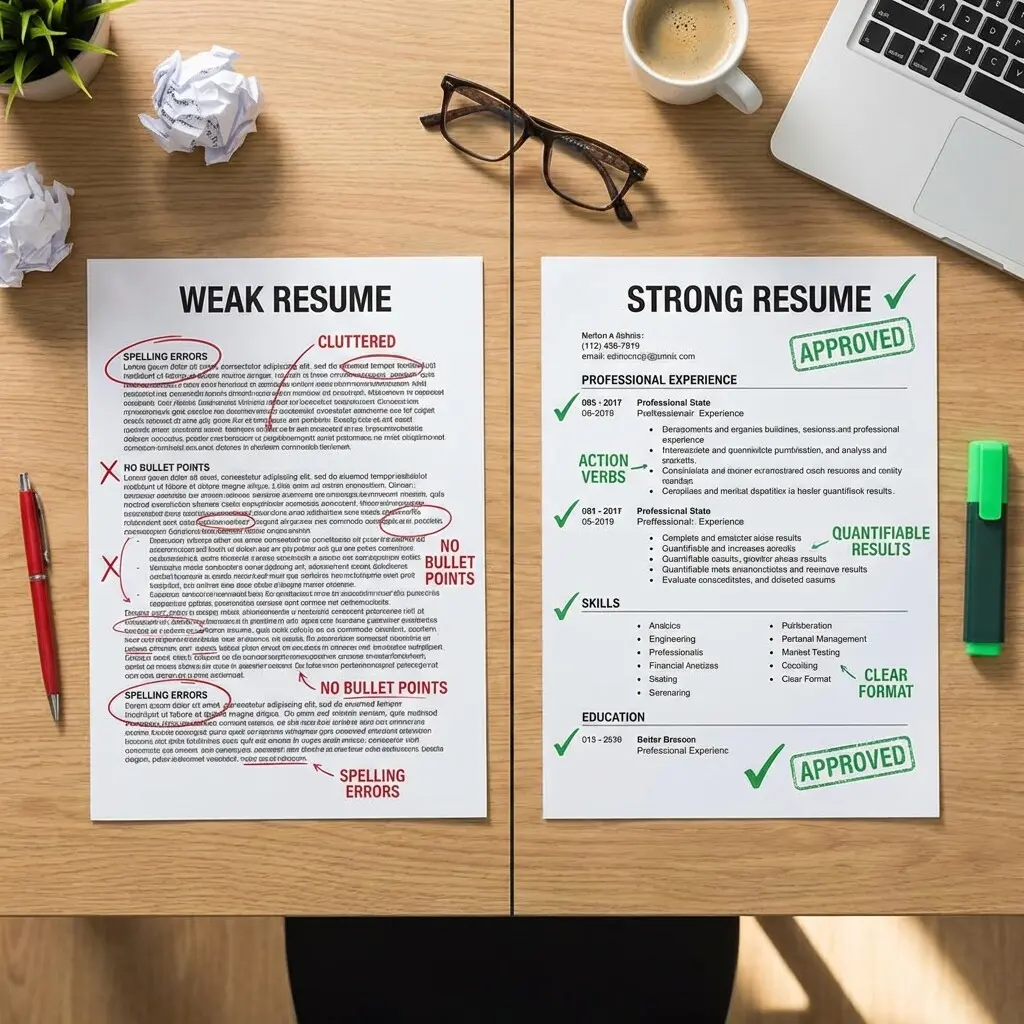
The biggest mistake? Listing responsibilities instead of achievements. "Responsible for product design" tells them nothing. "Led design of 15-component assembly from concept through production launch, achieving 99.2% first-pass yield" demonstrates engineering excellence.
Essential Skills for Mechanical Engineer Resumes
Mechanical engineers need a comprehensive skill set spanning design, analysis, and manufacturing.
Technical Design Skills
These demonstrate your core engineering competencies:
Analysis and Simulation Tools
These show you can validate designs before prototyping:
Manufacturing and Process Skills
These prove you understand production realities:
For comprehensive guidance on resume structure, check our ultimate resume guide.
How to Structure Your Mechanical Engineer Resume
Professional Summary: Lead with Specialization
Your summary should immediately establish your engineering focus and impact.
Strong Example:
"Mechanical Engineer with 6+ years of experience in automotive powertrain design, specializing in thermal management systems. Expert in SolidWorks, ANSYS Fluent, and DFM for high-volume manufacturing. Led development of cooling system that improved efficiency by 18% and reduced warranty claims by $1.2M annually. Six Sigma Green Belt certified."
Weak Example:
"Experienced mechanical engineer seeking a challenging position where I can apply my skills and grow professionally."
The strong example quantifies impact, specifies technical expertise, and demonstrates industry relevance.
Technical Skills Section: Be Specific
Create a dedicated section that passes ATS scanning:
Technical Skills
- CAD/CAM: SolidWorks (Expert), CATIA V5, AutoCAD, Creo Parametric
- Analysis: ANSYS Mechanical, ANSYS Fluent, MATLAB, Simulink, Minitab
- Manufacturing: GD&T (ASME Y14.5), DFM/DFA, Injection Molding, Sheet Metal
- Methods: Six Sigma, DFMEA/PFMEA, 8D Problem Solving, APQP
- Certifications: EIT (Engineer in Training), Six Sigma Green Belt
Work Experience: Quantify Everything
Structure achievements around the CAR format (Challenge, Action, Result):
Senior Mechanical Engineer
Automotive Systems Inc., Detroit, MI
June 2020 - Present
Each bullet connects engineering work to business outcomes.
Mechanical Engineer Resume Template
Here's a proven structure for engineering resumes:
Header
David Park, EIT
Detroit, MI | (555) 789-0123 | david.park@email.com
LinkedIn: linkedin.com/in/davidparkme | Portfolio: davidpark.engineer
Professional Summary
Mechanical Engineer with 5+ years of experience in automotive product development, specializing in powertrain components and thermal systems. Expert in SolidWorks, ANSYS, and high-volume manufacturing processes. Track record of launching 8 production programs with zero quality escapes. Reduced development costs by $2.1M through simulation-driven design optimization. EIT certified, pursuing PE licensure.
Technical Skills
CAD/CAM: SolidWorks (Expert), CATIA V5, AutoCAD, Creo
Analysis: ANSYS Mechanical, ANSYS Fluent, MATLAB, Simulink, Minitab
Manufacturing: GD&T, DFM/DFA, Injection Molding, Die Casting, Stamping
Methods: DFSS, DFMEA, DVP&R, APQP, Six Sigma
Programming: Python, MATLAB scripting, VBA
Professional Experience
Mechanical Engineer
Major Automotive Supplier, Detroit, MI
March 2021 - Present
Associate Mechanical Engineer
Industrial Equipment Corp., Cleveland, OH
June 2019 - February 2021
Education
Bachelor of Science in Mechanical Engineering
University of Michigan, Ann Arbor, MI
Graduated: May 2019 | GPA: 3.6/4.0
Senior Design Project: Designed and fabricated autonomous delivery robot, awarded 2nd place in ME capstone competition
Certifications
- Engineer in Training (EIT), Michigan - 2019
- Six Sigma Green Belt, ASQ - 2022
- SolidWorks CSWA Certification - 2020
Industry-Specific Resume Tips
Automotive Engineering
Emphasize APQP, PPAP, IATF 16949 experience, and OEM/Tier 1 relationships. Automotive companies value engineers who understand the product development process and can work within strict timing and quality requirements.
Aerospace Engineering
Highlight AS9100 quality systems, flight-critical design experience, and regulatory compliance (FAA, EASA). Aerospace values documentation rigor and risk mitigation methodologies. Understanding how to format experience matters for showing career progression.
Consumer Products
Focus on DFM for high-volume manufacturing, user-centered design, and rapid prototyping experience. Consumer products companies value engineers who can balance cost, quality, and time-to-market.
Medical Devices
Emphasize FDA design controls, risk management (ISO 14971), and verification/validation experience. Medical device companies require engineers who understand regulatory pathways and documentation requirements.
Common Mistakes on Engineering Resumes
1. Vague Technical Claims
"Proficient in CAD" proves nothing. Specify: "SolidWorks Expert (5+ years, CSWA certified), CATIA V5 (3 years), AutoCAD (proficient)." Be precise about your capabilities.
2. Missing Metrics
Engineers solve problems—show the results. "Improved efficiency" is weak. "Improved thermal efficiency by 18% through optimized fin geometry, validated through CFD and thermal testing" demonstrates engineering rigor.
3. Ignoring the ATS
Engineering roles use ATS heavily. Include exact software names (SolidWorks not "CAD software"), standard certifications, and terminology from the job description. Avoid words that weaken your resume.
4. Burying Technical Skills
Recruiters scan for specific tools and technologies. Create a dedicated Technical Skills section near the top—don't make them hunt through bullet points.
5. Omitting Projects
Significant engineering projects demonstrate capability as effectively as work experience. Include senior design, personal projects, or open-source contributions with the same rigor as job experience.
Salary and Career Growth
Mechanical engineers have strong career prospects across multiple industries. According to the Bureau of Labor Statistics, median salary for mechanical engineers exceeds $95,000, with senior roles and management positions significantly higher.
Career advancement paths include:
- Senior Mechanical Engineer or Technical Specialist
- Engineering Manager or Engineering Director
- Principal Engineer or Technical Fellow
- Product Development Manager
- VP of Engineering or CTO
Your resume should demonstrate progression toward your target level through increasing project complexity, leadership responsibilities, and technical depth.
Frequently Asked Questions
Should I include internships on my mechanical engineering resume?
Include relevant internships if you graduated within the last 5 years. Treat them like work experience with quantified achievements. After 5+ years of professional experience, summarize or remove internships.
How do I handle a gap in my engineering career?
Be honest and brief. If you pursued additional education, certifications, or relevant projects during the gap, highlight those. Engineers are evaluated on capability, not continuous employment. For more strategies, see our guide on handling resume gaps.
What if I've worked on confidential projects?
Describe outcomes without revealing proprietary details. "Designed core component for next-generation consumer device, improving performance by 40%" works without disclosing specifics. Use percentages and relative metrics when actual numbers are confidential.
Should I include my senior design project?
Yes, especially for recent graduates. Senior design projects demonstrate teamwork, project management, and technical problem-solving. Format like work experience with your role, technologies used, and outcomes achieved.
How important are certifications for mechanical engineers?
PE is important for consulting, government, and public works. EIT/FE shows commitment for early-career engineers. Industry certifications (Six Sigma, specific software certifications) add credibility. List certifications prominently if you have them.
Do I need a master's degree to advance in mechanical engineering?
Not necessarily, but it helps for research, specialized technical roles, and some management tracks. Demonstrated capability through projects and experience can substitute for advanced degrees in many paths.
Next Steps: Build Your Engineering Resume
You now have the framework for a mechanical engineer resume that demonstrates technical excellence. Here's your action plan:
- Lead with specialization: Define your engineering focus in the summary
- List technical skills precisely: Software names, versions, proficiency levels
- Quantify all achievements: Cost savings, efficiency gains, quality improvements
- Include significant projects: Treat major projects like work experience
- Show certifications: PE, EIT, Six Sigma, software certifications
- Match the job description: Use exact terminology from the posting
- Optimize for ATS: Standard headings, specific keywords, clean formatting
Build Your ATS-Optimized Mechanical Engineer Resume Today
Your engineering resume should demonstrate the same precision and attention to detail you bring to your designs. Show them you can solve complex problems, deliver results, and communicate technical value. Now build that resume with engineering rigor.