The "Gap Year" on Your Resume: Hide It or Own It?
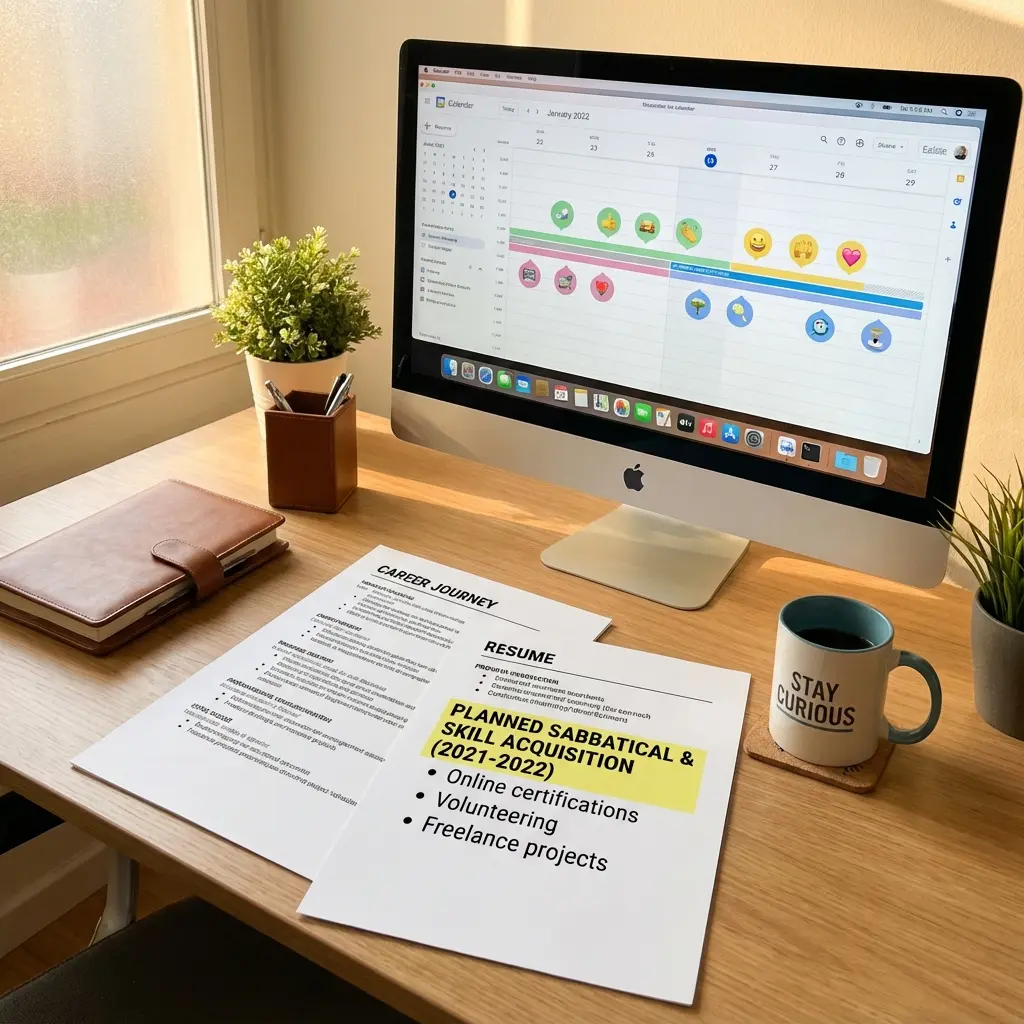
I'll never forget the panic I felt staring at my resume after taking 18 months off to care for my sick parent. How do I explain this? Will recruiters think I'm unemployable? Should I just... leave it out?
I tried both approaches. I hid the gap by using years instead of months. I got interviews, but then I'd have to explain it anyway, and it felt dishonest. Then I tried owning it—adding a line that said "Family Caregiver, 2019-2020." The interviews didn't stop. In fact, recruiters appreciated the honesty.
Here's what I learned: Employment gaps aren't career killers. How you present them is what matters.
The key is strategic framing—controlling the narrative before recruiters fill in blanks themselves. For a complete framework on gap packaging including date formatting, descriptive labels, and verbal explanations for interviews, see our strategic guide to employment gaps.
Short breaks—especially 1-3 months—barely register on a recruiter's radar.
If you were unemployed for 1-3 months, this is barely a gap. Most recruiters won't even notice or care. For comprehensive strategies on translating your experience, our ultimate experience translation guide covers the complete framework.
Let me show you exactly when to hide a gap, when to own it, and how to format it so recruiters see your value instead of a red flag.
First: How Big Is Your Gap?
Not all gaps are created equal. The strategy depends on the length:
Gaps Under 3 Months: Don't Mention It
What to do:
Example:
Marketing Manager | TechCorp
2022 - 2024

Senior Marketing Coordinator | StartupXYZ
2020 - 2022
If there's a 2-month gap between these roles, no one will know or care.
Gaps of 3-6 Months: Minimize It
What to do:
Example:
Product Manager | CompanyA
2023 - 2024

Product Manager | CompanyB
2020 - 2023
If you left CompanyB in March 2023 and started CompanyA in September 2023, the year format hides the 6-month gap.
Gaps of 6+ Months: Own It
Once you're past 6 months, the gap is noticeable even with year-only formatting. This is when you need to address it directly.
But here's the key: you're not apologizing. You're reframing it as a strategic choice or unavoidable circumstance.
The "Own It" Strategy: How to Format Career Gaps
When you have a significant gap, add it to your resume as if it were a position. Give it a title, dates, and a brief description.
Here's the formula:
[Descriptive Title] | [What You Were Doing] [Dates]
- [Brief explanation or what you accomplished during this time]
Let me show you examples for different types of gaps:
Example 1: Family Caregiving
EXPERIENCE

Marketing Director | TechCorp
2024 - Present
- [Your current role achievements]

Family Caregiver | Personal
2022 - 2024
- Provided full-time care for family member during medical treatment
- Maintained industry knowledge through online courses and certifications
- Completed Google Analytics and HubSpot certifications

Marketing Manager | StartupXYZ
2019 - 2022
- [Your previous role achievements]
Why this works: You're honest, you show you stayed current, and you demonstrate responsibility and commitment.
Example 2: Personal Health/Medical Leave
EXPERIENCE

Software Engineer | CompanyA
2024 - Present
- [Your current role achievements]

Medical Leave | Personal
2023 - 2024
- Took time off for medical treatment and full recovery
- Completed online courses in React and Node.js
- Contributed to open-source projects on GitHub

Software Engineer | CompanyB
2020 - 2023
- [Your previous role achievements]
Why this works: You're brief, you don't overshare medical details, and you show you stayed technically sharp.
Example 3: Travel/Sabbatical
EXPERIENCE

UX Designer | DesignStudio
2024 - Present
- [Your current role achievements]

Independent Research & Travel | Self-Directed
2023 - 2024
- Traveled to 15 countries studying global UX design trends and user behavior
- Conducted user research interviews with 50+ international users
- Documented findings in design blog with 10,000+ monthly readers

UX Designer | TechCompany
2020 - 2023
- [Your previous role achievements]
Why this works: You turned travel into professional development. You show initiative and curiosity.
Example 4: Job Search/Unemployment
EXPERIENCE

Sales Manager | CompanyA
2024 - Present
- [Your current role achievements]

Professional Development | Independent
2023 - 2024
- Completed advanced sales training and earned Salesforce certification
- Volunteered as sales mentor for local nonprofit, helping raise $50K
- Consulted for two small businesses on sales strategy

Sales Manager | CompanyB
2020 - 2023
- [Your previous role achievements]
Why this works: You reframe unemployment as intentional skill-building and giving back.
Example 5: Freelance/Contract Work
EXPERIENCE

Graphic Designer | AgencyA
2024 - Present
- [Your current role achievements]

Freelance Graphic Designer | Self-Employed
2022 - 2024
- Provided branding and design services for 15+ clients across various industries
- Managed all aspects of client relationships, project timelines, and deliverables
- Developed brand identities for 3 startups from concept to launch

Graphic Designer | AgencyB
2019 - 2022
- [Your previous role achievements]
Why this works: Freelancing isn't a gap—it's entrepreneurship. You show client management and business skills.
Format your resume to handle gaps confidently—use our professional templates
When to Use a Functional Resume (Rarely)
You might have heard that functional resumes (skills-based instead of chronological) are good for hiding gaps.
My advice: Don't do it.
Here's why:
Exception: If you have multiple gaps spanning several years and you're making a major career change, a hybrid resume (combination of skills and chronological) might work.
But for most people, a chronological resume with gaps addressed directly is better.
What to Say in Your Cover Letter
Your resume shows the gap. Your cover letter can briefly explain it—but only if it adds value.
When to mention the gap in your cover letter:
When NOT to mention it:
Example cover letter mention:
"After taking 18 months to care for a family member, I'm excited to return to marketing with fresh perspective and renewed energy. During my time away, I completed certifications in Google Analytics and HubSpot to ensure my skills remained current."
Keep it brief: 1-2 sentences max.
How to Talk About Gaps in Interviews
The resume gets you the interview. Now you need to talk about the gap confidently.
The Formula:
1. Acknowledge it briefly 2. Explain the reason (without oversharing) 3. Show what you learned or how you stayed current 4. Pivot to why you're excited about this opportunity
Example 1: Family Caregiving
"I took 18 months off to care for my parent during a serious illness. It was the right decision for my family, and I'm grateful I could be there. During that time, I stayed current by taking online courses and earning certifications. Now I'm ready to bring my skills and renewed focus to a role like this one."
Example 2: Layoff/Job Search
"I was laid off as part of a company-wide restructuring in early 2023. I took the opportunity to be strategic about my next move rather than jumping into the wrong role. I used that time to upskill, volunteer, and really think about what I wanted next in my career. That's why I'm so excited about this position—it aligns perfectly with my goals."
Example 3: Burnout/Mental Health
"I took a career break to focus on my health and well-being. It was one of the best decisions I've made. I came back with better boundaries, renewed energy, and a clearer sense of what I want in my career. I'm excited to bring that clarity and focus to this role."
Key principles:
Gaps That Actually Impress Recruiters
Some gaps can actually make you MORE attractive to employers. Here are the ones that tend to impress:
1. Entrepreneurship/Starting a Business
Even if your startup failed, it shows:
How to format:
Founder & CEO | StartupName
2022 - 2024
- Built and launched SaaS product from concept to 1,000 users
- Managed product development, marketing, and customer success
- Raised $50K in seed funding from angel investors
- Learned valuable lessons about product-market fit and customer discovery
2. Advanced Education/Certifications
Going back to school shows commitment to growth.
How to format:
MBA Student | University Name
2022 - 2024
- Completed MBA with focus on Marketing Strategy
- Led consulting project for Fortune 500 client
- Graduated with 3.8 GPA while working part-time
3. Volunteer Work/Nonprofit Leadership
This shows values and leadership.
How to format:
Volunteer Program Director | Nonprofit Name
2023 - 2024
- Led volunteer program serving 500+ community members
- Managed team of 20 volunteers and coordinated events
- Increased program participation by 150% through strategic outreach
4. Sabbatical with Purpose
Travel or personal projects that resulted in growth or skills.
How to format:
Independent Research & Writing | Self-Directed
2023 - 2024
- Researched sustainable business practices across 10 countries
- Published 15 articles on industry blog with 50,000+ readers
- Developed expertise in international market trends
Red Flags to Avoid
While most gaps can be explained positively, avoid these mistakes:
Special Case: Multiple Gaps
If you have several gaps throughout your career, you need a different strategy:
Option 1: Address the pattern in your cover letter
"You'll notice I've taken several career breaks over the years for family caregiving responsibilities. These were necessary and important, but they're now behind me. I'm committed to my next role and excited to bring my full focus and experience."
Option 2: Use a skills-based summary
Start your resume with a strong summary that highlights your total years of experience and key achievements, then list your chronological work history below.
Option 3: Be selective about what you include
If you have 20 years of experience with multiple gaps, you don't need to list every single role. Focus on the most recent and relevant 10-15 years.
Industry-Specific Considerations
Different industries view employment gaps differently:
Tech/Startup: Gaps for learning new technical skills, side projects, or failed startups are often viewed positively. Emphasize what you built or learned.
Finance/Consulting: These industries prefer continuous employment. If you have a gap, show you stayed sharp through certifications, consulting, or volunteer board positions.
Creative Fields: Gaps for freelance work, personal projects, or travel can actually enhance your portfolio. Frame them as periods of creative exploration and skill development.
Healthcare/Education: Gaps for family care or continuing education are well-understood. Be straightforward and focus on your readiness to return.
Quick Reference: Gap Explanation Templates
Use these templates as starting points for your resume entries:
Template 1: Career Break for Personal Growth
Professional Development & Travel | Self-Directed
[Dates]
- Took intentional career break to [specific purpose: travel, learn new skills, etc.]
- [Specific achievement or learning during this time]
- [How you stayed current in your field]
- [What you're bringing back to your career]
Template 2: Family Responsibilities
Family Caregiver | Personal
[Dates]
- Provided full-time care for [family member] during [situation]
- Maintained professional skills through [online courses, certifications, reading]
- Completed [specific certifications or training]
Template 3: Health-Related Gap
Medical Leave | Personal
[Dates]
- Took time off for medical treatment and full recovery
- Stayed current in field through [specific activities]
- [Any relevant certifications or skills acquired]
Template 4: Intentional Job Search
Professional Transition | Independent
[Dates]
- Conducted strategic job search while [upskilling/consulting/volunteering]
- Completed [certifications, courses, or training]
- [Volunteer work or consulting projects]
- [Skills developed or strengthened]
The Bottom Line
Employment gaps are normal. Life happens. Recruiters know this.
What they want to see is:
My recommendation:
- Gaps under 3 months: Ignore them
- Gaps of 3-6 months: Minimize with year-only formatting
- Gaps of 6+ months: Own them with a descriptive entry on your resume
Don't hide. Don't apologize. Reframe your gap as a chapter in your professional story that made you stronger, wiser, or more skilled.
I took 18 months off for family caregiving. It's on my resume. I talk about it in interviews. And it has never cost me a job opportunity.
Your gap doesn't define you. How you talk about it does. If your history includes both gaps and frequent job changes, see our guide on explaining job hopping for additional strategies.
Own your story. Format it professionally. Move forward with confidence.
You've got this.