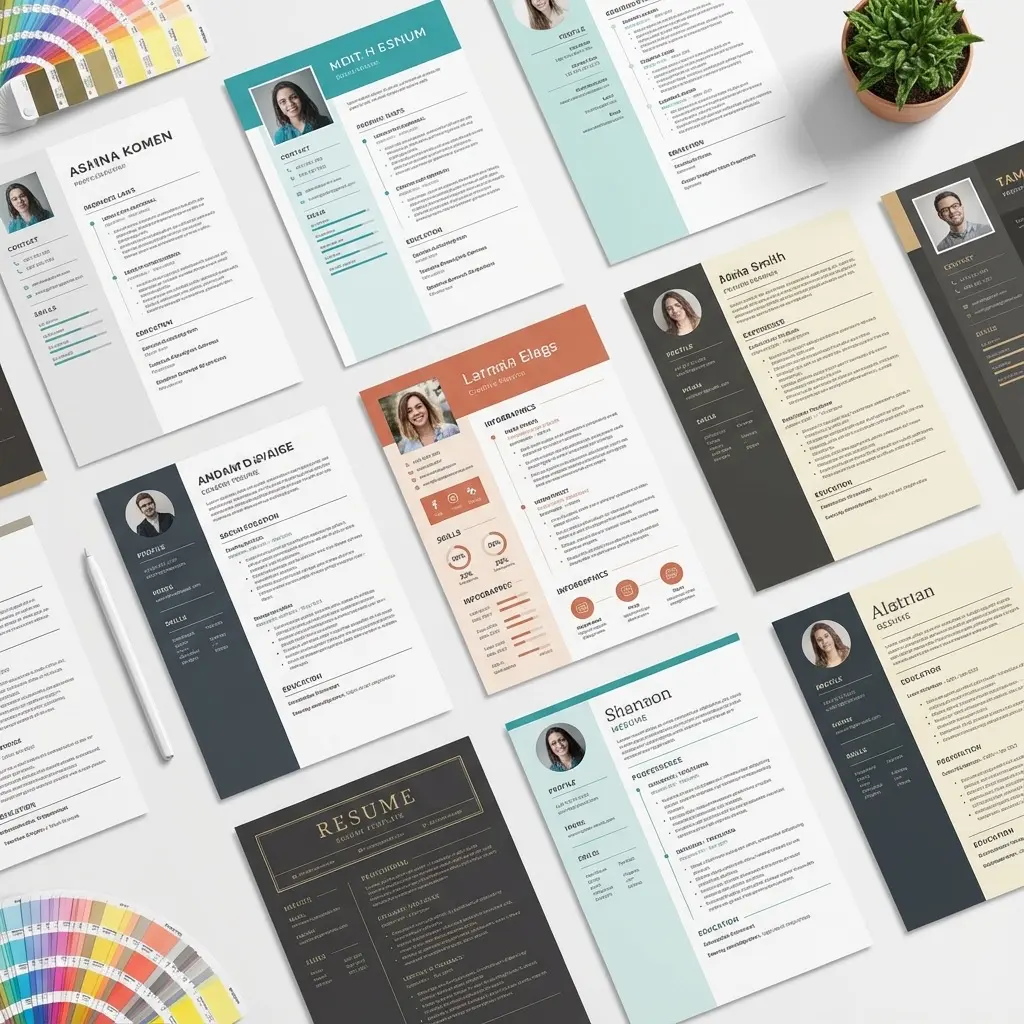
The Ultimate Experience Translation Guide (Resume & CV Strategy 2026)

Writing a resume feels overwhelming. You stare at a blank screen, wondering: Does this look professional?, Will an AI robot reject me?, Is it called a CV or a Resume?
You are not alone. 95% of job seekers struggle with these exact questions.
This is not just another list of tips. This is the Ultimate Cornerstone Guide to Experience Translation. We don't just "write" resumes; we translate your raw labor into an asset that companies want to buy.
In this massive guide, we cover:
- The Gold Filter: How to remove 100% of fluff.
- Resume vs. CV: The definitional battle.
- Format & Structure: The blueprints of success.
- ATS Optimization: How to pass the robots.
- Step-by-Step Writing: From header to footer.
- Examples & Templates: What actually works.
What is "Experience Translation"?
Before we dive into formats and tactics, you must understand the core philosophy.
Experience Translation is the skill of rewriting your work history from the language of "job duties" (what you were supposed to do) into the language of "business value" (what you actually delivered). For a complete reference on this methodology, return to the Ultimate Experience Translation Guide whenever you're writing or updating your resume.
The Core Truth: Your resume is not your biography. It is not a chronicle of events that happened to you. It is proof of value—evidence that hiring you is a smart bet. The market does not buy histories; it buys outcomes. The gap between what candidates know and what they write is a translation gap: 90% describe their job instead of proving their impact. The fix is structural, not cosmetic—optimization tweaks documents, but translation rewires how you think about your work. For the philosophical foundation behind this methodology—why the market rewards proof over narrative and how to internalize the mindset shift—see our Experience Translation Manifesto.
Why 90% of Candidates Are Invisible
Most candidates think like this:
"I need to list what I did at my job. I managed projects. I worked with stakeholders. I delivered results."
This is why you're invisible. You're describing your job description, not your value. Every other candidate says the same thing.
How the market actually reads you:
- "Managed projects" = You had a title. So what?
- "Worked with stakeholders" = You attended meetings. So what?
- "Delivered results" = You didn't get fired. So what?
The brutal truth: Your resume doesn't fail because of fonts or keywords. It fails because you're speaking a language the market doesn't buy.
The Translation
❌ How 90% of candidates think: "Managed the sales team."
✅ How the market reads value: "Led 8-person sales team to exceed Q3 quota by 25%, generating $1.2M in new ARR."
The first version is a job duty. Anyone with that job title could write it. It proves nothing.
The second version is business value. It's specific, measurable, and proves your impact. This is what gets bought.
For a deep dive into this concept, see our guide on what is Experience Translation.
Part 1: Resume vs. CV
Resume: 1-2 pages. Corporate jobs. US/Canada/Global. Competency-focused.
CV: 3-10+ pages. Academia/Medicine/Law/Science. Full career history (publications, awards, research). 3 The rule: Corporate job → Resume. PhD/Medical fellowship → CV.
Note: UK/Ireland/New Zealand use "CV" to mean resume.
Part 1.5: The One Rule to Rule Them All (The Gold Filter)
Before we talk about formats or fonts, you must learn the Gold Filter Rule. This is the core methodology of modern experience packaging.
The rule is simple: If a sentence cannot be turned into a quantifiable bullet point, it does not exist.
The Binary Test (FAIL or PASS)
Every sentence on your resume must pass 2 out of 3 of these tests. If it fails, delete it immediately.
Test 1: Can you express this as a number?
- ❌ "Improved team performance" → NO (by what? 2%? 200%?)
- ✅ "Improved team velocity by 40%" → YES
Test 2: Would someone outside your role understand the change?
- ❌ "Optimized the ETL pipeline" → NO (what changed? for who?)
- ✅ "Reduced data processing time from 6 hours to 45 minutes" → YES
Test 3: Is there a before/after state?
- ❌ "Responsible for customer success" → NO (what was the outcome?)
- ✅ "Reduced churn from 8% to 4%, retaining $2M ARR" → YES
The Law: If 2 out of 3 = NO → Delete it. No exceptions.
Return to the Gold Filter whenever you need to calibrate a bullet point.
Examples
- "I am a motivated self-starter" → DELETE (0/3 tests passed)
- "Strong communication skills" → DELETE (0/3 tests passed)
- "Passionate about technology" → DELETE (0/3 tests passed)
- "Increased sales by 20%" → KEEP (3/3 tests passed)
- "Reduced incident response time from 4 hours to 30 minutes" → KEEP (3/3 tests passed)
If your resume feels weak, it is because it is full of fluff. For a complete breakdown of this rule with examples, see our resume Gold Filter rule guide.
The "So What?" Audit Extension
The Gold Filter tells you WHAT to delete. The "So What?" test tells you HOW to audit systematically. For every bullet point on your resume, ask: "If a recruiter reads this and thinks 'So what?', does it have an answer?"
The Audit Framework:
This is a real-time quality check during resume writing. Read each bullet point aloud. After reading it, ask "So what?" out loud. If you hesitate—even for 2 seconds—the bullet fails. It's activity without value, duty without proof, motion without outcome.
Common "So What?" Failures:
- "Managed team projects" → So what? What did you achieve?
- "Worked with stakeholders" → So what? What changed because of your work?
- "Improved processes" → So what? By how much? What was the measurable result?
The Five-Step Systematic Audit Process:
- Read the bullet point out loud
- Ask "So what?" immediately after reading
- Identify activity vs value — Does it describe what you did (activity) or what you delivered (value)?
- Add context + metric — Rewrite using Action + Context + Outcome formula
- Re-test — Ask "So what?" again. If the answer is now clear and quantified, the bullet passes
The difference between a duty and an achievement is simple: a duty describes what you were responsible for ("Managed social media"); an achievement describes the result you delivered ("Grew Instagram following from 2K to 15K in 6 months, driving 30% increase in website traffic"). This audit process transforms the first into the second.
The Gold Filter removes fluff. The "So What?" test prevents you from adding new fluff while writing. Together, they form a complete quality system: Filter out weakness (Gold Filter) + Prevent new weakness ("So What?" test) = Dense, value-heavy resume. For the complete systematic audit framework with before/after examples across all roles and common audit failures by function, see our "So What?" Test for Every Bullet Point guide.
Part 1.6: The 3 Deadly Mistakes (Why Resumes Fail)
Mistake #1: The Density Problem
Symptom: "Passionate professional with strong communication skills looking for a challenging role."
Why it fails: Zero weight. Anyone can write it. It proves nothing.
Why resumes fail even when they're "optimized":
Most candidates think optimization means:
- ❌ Adding more keywords → Wrong. Keywords ≠ signal. ATS filters for keywords, but recruiters filter for impact.
- ❌ Using a better template → Wrong. Formatting ≠ meaning. A beautifully formatted list of duties is still worthless.
- ❌ Following resume templates → Wrong. Templates ≠ differentiation. Every candidate uses the same template, so you're still noise.
The real problem: Your resume has zero density. It's full of air.
The Fix: Replace fluff with facts. Instead of "Strong communicator," write "Presented quarterly roadmap to 100+ stakeholders across 5 departments."
For a complete breakdown of how to identify and eliminate fluff systematically, read: Why Your Resume Isn't Getting Interviews (The Real Reason)
Mistake #2: Listing Duties Instead of Achievements
❌ "Responsible for managing the sales team."
✅ "Managed sales team of 5 to exceed Q3 quota by 25%, closing $1.2M in new deals."
Mistake #3: No Metrics, No Proof
❌ "Improved team efficiency."
✅ "Improved sprint velocity from 12 to 18 story points by implementing daily standups."
Build your professional resume with our free templates
Part 2: The 3 Winning Formats
1. Reverse-Chronological (The Gold Standard)
90% of recruiters want this. Current job first, goes backward.
- Easy to read, ATS-friendly
- Highlights employment gaps
- Use: Everyone with steady career path
2. Functional (The Skill-Based)
Recruiters hate it. They assume you're hiding something. ATS struggles with it.
- Hides gaps, good for drastic career changers
- Use: Only if you have massive gaps or career pivot. Use with caution.
3. Hybrid (The Combination)
Skills section + chronological work history.
- Highlights skills immediately
- Can get cluttered
- Use: Senior professionals with diverse skill sets
For a detailed comparison with real examples and recruiter preferences, see our chronological vs functional resume verdict.
Executive resumes operate on different rules entirely. At the VP and C-suite level, the standard one-page reverse-chronological format undersells candidates by two levels of seniority. Executive documents require a leadership narrative summary (4-6 lines, not 2-3), enterprise-level outcome bullets instead of operational tasks, a Leadership Competencies section instead of a technical skills list, and a Career Foundation section that consolidates early roles into single lines. The audience shifts from HR screeners to board members and search committees who evaluate strategic capacity, not task completion—see our executive resume vs standard resume guide for the complete structural comparison with examples at each level.
Consulting experience requires a dual translation. Consultants face a translation challenge that most professionals do not: they must translate both the engagement format (multiple clients, overlapping timelines, confidential work) and the consulting vocabulary (workstreams, deliverables, stakeholder alignment) into industry-standard language. The structural decision—whether to list engagements separately under the firm name or consolidate client impact into aggregate bullets—depends on whether the firm brand or the client portfolio carries more weight for the target role. The deeper problem is the implementation perception gap: hiring managers assume consultants advise but do not execute, so every engagement must include at least one bullet demonstrating hands-on delivery, not just strategic recommendations—see our consulting experience resume packaging guide for the two structural formats with jargon translation tables and exit-path positioning strategies.
Internal promotions require a different translation strategy. When you apply for a promotion within your current company, the standard resume approach fails because your audience already knows the organization but may not know your specific impact. The competitive advantage is specificity: naming internal projects, referencing company KPIs, and showing role progression under a single company header with explicit promotion dates and reasons. The trap is assuming familiarity equals advocacy—your resume is circulated to decision-makers who may have never worked with you directly, so every achievement must be documented as if the reader has no context—see our resume for internal promotion guide for the positioning framework.
Part 3: How to Beat the ATS (Applicant Tracking System)
Half of all resumes are rejected before a human ever sees them.
The ATS filters applications based on keywords and formatting. Use standard fonts (Arial, Calibri, Times New Roman) and avoid graphics or columns.
Quick ATS Checklist:
- ❌ No graphics, icons, or photos (in US).
- ❌ No tables or columns (some parsers break).
- ✅ Use standard fonts: Arial, Calibri, Helvetica, Roboto.
- ✅ Use standard headings: "Work Experience", not "My Journey".
- ✅ Save as .docx or .pdf (but ensure text is selectable).
- ✅ Avoid creative templates with graphics, images, or complex layouts. Curious about whether viral creative resumes actually get hired? We tracked 50+ viral resume examples to see what happened.
Part 4: Step-by-Step Writing Guide
The Section Order Principle (Information Hierarchy)
Before writing individual sections, understand that resume structure signals seniority and professionalism. The order of your sections tells recruiters your career stage and priorities. Standard structure: Header → Summary (optional) → Experience → Education → Skills → Certifications. But this shifts by career stage: entry-level candidates place Education before Experience (degree is strongest credential), mid-level professionals place Experience first (work history now primary), technical roles place Skills near the top (tech stack must be immediately visible for ATS matching), career changers place Skills high to signal new competencies, and senior executives require a summary (contextualizes long career). Section order isn't aesthetic—it's strategic signaling. Put your strongest credential first, follow professional norms for your field, and never bury critical information (technical skills at the bottom of an engineering resume = ATS rejection). For complete ordering rules by career stage and role type, with ATS-friendly structure guidelines, see Resume Structure: What Goes Where (And Why).
Step 1: The Header
- Name: H1, Big and Bold
- Location: City, State (or "Remote"). No full address
- Contacts: Phone, professional email (no
sweet-pie-99@hotmail.com) - Links: LinkedIn (custom URL), Portfolio, GitHub
For common header mistakes that kill your chances (like including photos in the US or listing full addresses), see our guide on resume header mistakes. If you're applying for remote positions internationally, learn how to handle listing digital nomad visas on your CV.
Step 2: The Professional Summary
The "Objective" statement is dead. Use a Summary.
- Bad: "Looking for a challenging role."
- Good: "Senior Marketing Manager with 7+ years of experience driving 40% growth in SaaS revenue. Expert in SEO, PPC, and team leadership."
The Formula Approach: Instead of writing generic trait-based summaries ("passionate professional with excellent communication skills"), use structured formulas that lead with value. The Generalist Formula works for most roles: [Role] with [X years] in [Industry], specializing in [Skills]. [Quantified Achievement]. The Specialist Formula fits technical roles: [Title] specializing in [Tech Stack]. [X years] building [Systems]. Expert in [Core Skills]. [Technical Metric]. The Pivot Formula handles career changes: [Current Role] transitioning to [Target Role], bringing [X years] of [Transferable Skills]. For complete templates and before/after examples across all career stages, see The Professional Summary That Isn't Cringe.
Not sure whether to use a summary or an objective? See our guide on resume summary vs objective.
Step 3: Work Experience (The Meat)
- Format: Role | Company | Dates | Location.
- The Content: Use Bullet Points.
- The Secret Sauce: Action + Scope + Constraint + Measurable Outcome
The Canonical Impact Formula
Every bullet point must follow this structure:
Action + Scope + Constraint + Measurable Outcome
Action: Strong verb (Led, Built, Reduced, Scaled)
Scope: What system/team/process you acted on
Constraint: What made it hard (timeline, budget, scale, complexity)
Measurable Outcome: The quantified result ($, %, time, users)
This simplifies to the three-part formula: Verb + Context + Metric. The verb signals ownership, context proves scale and complexity, and the metric demonstrates impact. For a complete breakdown of this formula with examples across all roles, see our Impact Formula: Verb + Context + Metric guide.
Examples:
✅ "Reduced [Action] cloud infrastructure costs [Scope] for 50-service microservices architecture [Constraint] by 35% ($400K annually) [Outcome]"
✅ "Built [Action] data pipeline [Scope] under 3-week deadline [Constraint] processing 2M records/day with 99.9% uptime [Outcome]"
✅ "Led [Action] cross-functional team of 12 [Scope] through 6-month product launch [Constraint] delivering $2M ARR in Q1 [Outcome]"
❌ "Responsible for managing cloud costs" → Duty, not outcome. Delete.
❌ "Worked on data pipeline" → No scope, no outcome. Delete.
Why Context Separates Junior from Senior
The difference between "Managed a team" and "Led 8 engineers across 3 time zones" is context. Context includes team size, budget, timeline, volume, geographic scope, stakeholder complexity, and technical constraints. Without context, every claim sounds generic and unverifiable. With context, you prove the scale and difficulty of your work. For dozens of before/after examples showing how context transforms vague bullets into proof of senior-level performance, see Context is King: "Managed Team" vs "Led 5 Devs".
Choosing Verbs That Signal Ownership
Your verb choice sets the ownership level before recruiters read your metrics. Weak verbs like "helped," "assisted," "worked on," "participated in," and "responsible for" position you as support staff, not the driver of results. Strong verbs like "Led," "Built," "Launched," "Optimized," "Scaled," and "Negotiated" signal direct accountability. Replace every passive or subordinate verb with an ownership signal that matches your actual role. For a complete taxonomy of weak verbs to avoid and strong replacements across leadership, creation, improvement, and negotiation categories, see Weak Verbs That Kill Your Resume (And What to Use Instead).
When to Use Sub-Bullets (The Hierarchy Decision)
Most achievements work as single bullets. But complex accomplishments with multiple dimensions sometimes need sub-bullets to communicate scope without creating unreadable run-on sentences. The rule: sub-bullets clarify, they never substitute for weak main bullets. A strong main bullet states the headline achievement; sub-bullets add supporting context (secondary metrics, scope details, technical stack). The constraint: maximum two sub-bullets per main bullet—more creates scanning problems and buries the main point. When sub-bullets fail: when they repeat the main bullet, when they should be main bullets themselves, or when the main bullet is weak and sub-bullets do all the work. The formatting: use different symbols (dash for sub vs solid circle for main), indent 0.25-0.5 inches, and maintain consistency throughout. If you cannot limit to two sub-bullets, the achievement should be split into separate main bullets. For complete decision frameworks, formatting rules, and before/after examples of effective bullet hierarchy, see our sub-bullets hierarchy guide.
For a complete framework on transforming duties into quantified achievements, see our guide on how to write accomplishments on your resume. For a deep dive into the technicalities of structuring this part of your document, see our resume work experience section guide.
The Diagnostic "Before vs After" Mindset
Most resume guides show you the "after"—polished bullets that work. But they skip the diagnostic process: how to identify what's weak and why. The strongest resume writers don't just copy good examples. They develop a systematic diagnostic lens for spotting weakness in real time.
The Diagnostic Framework: For every bullet you write, ask three questions: (1) What made it weak? (duty-based? no metric? vague scope?) (2) What fix addresses that specific weakness? (add outcome, quantify scale, show value) (3) Why is the new version stronger? (proof of impact, not just activity). This isn't template copying—it's developing intuition for translating experience. You're learning to self-diagnose and self-correct without external feedback loops.
Common Diagnostic Patterns:
- Weak: "Managed projects" → Diagnosis: No scope (how many?), no outcome (what changed?) → Fix: Add project count + delivery metric → Strong: "Led 12 cross-functional projects with 98% on-time delivery rate"
- Weak: "Responsible for sales" → Diagnosis: Duty language, no results → Fix: Replace "responsible" with outcome verb + quota metric → Strong: "Closed $1.2M ARR, exceeding quota by 135%"
- Weak: "Improved processes" → Diagnosis: Vague improvement, no baseline → Fix: Specify process + before/after metric → Strong: "Reduced order fulfillment time from 4.2 days to 2.6 days, saving $200K annually"
The diagnostic mindset separates copywriting from transformation. Templates give you the "what." Diagnosis teaches you the "why"—and once you understand the "why," you can fix any bullet, regardless of role or industry. For 10 comprehensive before/after transformations across Software Engineer, Product Manager, Sales, Operations, and more, with full diagnostic breakdowns explaining why each change strengthens the resume, see our Resume Before vs After Case Studies.
The pattern works across every role: software engineers reduce latency and cut cloud spend; marketers increase traffic and lower CAC; operations managers improve cycle time and reduce costs; sales professionals close deals and exceed quota. Your job is to find the numbers that prove your version of these outcomes.
Special case: Students with no work experience? You can still build a compelling resume by showcasing projects, coursework, and volunteer work as professional experience. Learn how to include freelance work on your resume even if it's side projects, and see our complete guide on listing freelance work strategically. If you have volunteer experience, discover how to position volunteer work to demonstrate professional skills.
Projects as proof of capability: For students and recent graduates, the projects section often carries more weight than any other section because it demonstrates applied skill rather than theoretical knowledge. Every project should follow the Problem-Approach-Result framework: name the challenge it addressed, list the specific tools and technologies used, and quantify the outcome (users, performance metrics, or scope). Two well-described projects with verifiable links outperform five vague descriptions—see our student resume projects and portfolio guide for the complete framework with examples by project type.
Career fairs as resume delivery systems: Your resume exists in two contexts: digital (ATS submission) and physical (handed to a recruiter). Career fairs compress the job search into 2-3 minute conversations where resume format, elevator pitch, and follow-up speed determine whether you advance to an interview. The students who convert fair conversations into callbacks prepare 2-3 resume versions targeting different company types, deliver a 30-second pitch structured as name-proof-interest-question, and follow up within 24 hours—see our career fair resume preparation guide for the complete tactical playbook.
Part-time roles as full-weight experience: The translation methodology applies regardless of hours worked. A part-time cashier who reduced checkout wait times by 20% has produced the same type of measurable outcome as a full-time operations lead. The critical formatting rule: never label a role as "Part-Time" in the job title—it invites the reader to discount the entry before reading your bullets. Format part-time roles identically to full-time roles (Title, Company, Dates, quantified bullets), and let the accomplishments determine perceived seniority. When you held concurrent part-time positions, list the most relevant role first and treat overlapping dates as evidence of workload management—see our part-time job resume formatting guide for the complete formatting framework with before/after examples.
Volunteer work as professional proof: Volunteer experience follows the same legitimacy test as side projects (2 out of 3: relevant skill + measurable outcome + execution ownership), but the placement decision is more nuanced. When volunteer work is your strongest qualification for a target role, it belongs in your main Experience section alongside paid work—not in a separate "Volunteer" section that signals lesser importance. The formatting is identical: Role Title, Organization, Location, Dates, and 2-4 quantified bullets. The key: if you can write at least two strong bullets with numbers (people managed, funds raised, events organized, outcomes delivered), the role earns full resume treatment regardless of compensation status—see our volunteer experience resume formatting guide for placement rules by career stage, bullet-writing frameworks, and examples across career changers, gap periods, and students.
Step 4: Education
- Degree, Major, University, Graduation Year.
- If you have experience, put this at the bottom.
- If you are a fresh grad, put this at the top.
The Credential Relevance Filter
Experience Translation applies not just to work history—it extends to credentials. The question isn't "Did I earn this degree/certification?" but "Does this credential prove I can do the job I'm applying for?"
The Relevance Test:
Every credential on your resume must pass: Does this prove relevant capability for my target role? If NO → cut it. This is credential translation: converting raw educational history into targeted proof of qualification.
Common Credential Translation Mistakes:
- Listing every online course ever completed (signals desperation, not expertise)
- Including high school education when you have a college degree (wastes space)
- Displaying outdated certifications (5+ years old in fast-moving fields)
- Showing GPA when you have 3+ years of experience (work results matter more)
The Translation Rule: Recent grads lead with education (strongest credential). Mid-career professionals place it last (work history is stronger). Career changers promote relevant bootcamps/certificates above unrelated degrees (signal intent).
The Three-Tier Certification Hierarchy:
- Industry-Recognized (Always Include): PMP, CPA, AWS Certifications, Scrum Master—credentials that employers actively search for
- Bootcamp Certificates (Include with Context): General Assembly, App Academy—increasingly recognized in tech, format with hours/projects
- Online Course Certificates (Use Sparingly): Coursera, Udemy—only if from credible institutions (Stanford, Google) and directly relevant to role
The inclusion decision isn't binary. It's contextual. A Google Analytics certification matters for a digital marketer. It's noise for a backend engineer. Apply the same relevance filter to credentials that you apply to work bullets: does this prove I can do the job?
Not every degree or certification belongs on your resume. The relevance filter separates credentials that strengthen your candidacy from those that dilute it. For complete decision frameworks on what to include, what to skip, bootcamp formatting, GPA rules by career stage, and expiration date handling, see our Certifications & Education: What to Include (And What to Skip). For legacy education section guidance, see resume education section guide. If you have specific certifications, learn how to list certifications strategically. For academics and researchers, see how to list publications on your resume.
Step 5: Skills
Group them logically.
- Languages: Spanish (Native), English (C2).
- Tech: Python, React, SQL, AWS.
- Tools: Jira, Salesforce, HubSpot.
The Taxonomy Principle: When you have 8+ technical skills, grouping by functional category transforms a comma-separated wall of keywords into a scannable hierarchy that both ATS and recruiters can parse. For software engineers, use: Programming Languages, Frameworks/Libraries, Databases, Cloud/DevOps, Tools. For data professionals: Programming, Data Analysis, Visualization, Machine Learning, Big Data, Cloud. For product managers: Product Tools, Analytics, Design, Methodologies. This categorical structure improves ATS keyword matching (systems search within context) and signals seniority through breadth-and-depth visualization. Technical roles should place Skills before Experience; non-technical roles should place them after. For complete taxonomies by role with formatting rules and ATS optimization strategies, see Skills Section: Grouping vs Listing.
For creative and design roles, visual presentation of skills matters, but ATS compliance is still critical.
Part 4.5: Hard Skills vs. Soft Skills
Hard Skills (The "Must-Haves")
Examples: Python, Spanish, Forklift Driving, SEO, GAAP Accounting.
Where: Dedicated "Skills" section (bottom for experienced hires, top for technical roles).
See hard skills vs soft skills resume placement for placement guidance.
Soft Skills (The "Nice-to-Haves")
Examples: Leadership, Communication, Resilience, Teamwork.
Where: NEVER in a list. Anyone can write "Good Communicator". It proves nothing.
The Fix: Prove it in your bullets.
- Don't write: "Leadership" in skills list
- Do write: "Led team of 5..." in experience bullets
Soft Skills Must Be Quantified: The most common resume mistake is listing soft skills as adjectives ("excellent communicator," "strong leader"). These are empty claims. The fix: translate intangibles into measurable coordination and influence outcomes. Communication becomes stakeholder count + meeting cadence + alignment metrics. Leadership becomes mentorship outcomes + initiative adoption + decision velocity. For the complete system of turning soft skills into proof, see our Quantifying Soft Skills guide.
Transferable Skills
Examples: Project Management, Public Speaking, Data Analysis.
For career changers, our career change resume guide shows how to identify and position transferable skills. If you're changing careers at 30+, see our career change at 30 resume guide for age-specific strategies. Transitioning from military? Our military to civilian career transition guide translates military experience into civilian terms.
Part 4.6: Translating Experience Across Career Transitions
The Experience Translation methodology extends beyond optimizing your current role—it works across industry boundaries. When switching careers, you're not starting from zero. You're translating skills from one professional language to another.
The Cross-Industry Translation Framework
Every industry uses different vocabulary for universal skills. Teachers call it "differentiated instruction"—product managers call it "user segmentation." Lawyers call it "case strategy"—sales professionals call it "deal structuring." The underlying capability is identical; only the wrapper changes.
The Three-Step Translation Process:
- Map Universal Skills: Extract the 5-10 most repeated capabilities from target-role job descriptions (project management, stakeholder communication, data analysis, budget management)
- Match Past Experience: Identify where you've demonstrated these skills—even under different names
- Rewrite in Target Language: Translate your bullets using terminology from your new industry
Example Translation (Teacher → Product Manager):
- Before (Teacher language): "Taught 30 students using differentiated instruction"
- After (PM language): "Managed cohort of 30 learners, achieving 95% progression rate through adaptive delivery methods"
Same work. Different framing. Suddenly it reads as product management experience.
The bridge between your past and future isn't a career gap—it's a translation layer. For the complete system on mapping transferable skills and rewriting experience in target-industry language, see our Career Transitions: Translating "Irrelevant" Experience guide.
The objective statement reframes the pivot before recruiters reach the experience section: Career changers face a specific structural problem that linear-progression candidates do not: the most recent job title is the wrong signal. A recruiter opening a teacher's resume for a marketing role sees "Teacher" in the first 6 seconds and categorizes the candidate as mismatched before reading further. The solution is a targeted objective statement (not a summary) that leads with the target role name, includes one quantified transferable achievement, and explicitly bridges past experience to future value. The format that works: "[Target Role] leveraging [X years] of [previous field] experience where I [specific quantified achievement]. Applying [transferable skill] to [target context]." This reframes the narrative in 40-60 words, before the recruiter has a chance to build their own frame from your previous industry. For complete objective formulas across 8 common career pivots (teaching to marketing, sales to PM, military to operations, hospitality to HR, nursing to admin, and more), see our resume objective for career changers guide.
Cover letters as the narrative frame for career pivots: The resume proves transferable skills through metrics, but the cover letter controls how the reader interprets those metrics. Career changers who lead their cover letter with a relevant metric from their previous field—before mentioning the pivot—set the narrative frame before the reader encounters the non-traditional background. The Value Bridge Framework structures this: open with an achievement that directly maps to the target role's needs, build a bridge connecting 2-3 transferable outcomes to the job's core requirements, and close with forward momentum rather than justification. The critical rule: never apologize for changing careers, and never lead with what you lack—lead with what you bring from a different context, because cross-industry perspective is a competitive advantage when framed correctly. For the complete framework with before/after examples across teaching-to-marketing, sales-to-PM, military-to-operations, and other common pivots, see our career change cover letter guide.
Part 4.7: Strategic Framing for Employment Gaps
Employment gaps don't kill resumes—poor narrative control does. The Experience Translation methodology applies not just to what you did, but to how you package periods when traditional employment paused.
The Gap Framing Principle
Gaps are normalized in 2026 (layoffs, parental leave, sabbaticals, health issues). What triggers rejection isn't the gap itself—it's unexplained absence. The fix: reframe gaps with intentional, descriptive labels that control the narrative before recruiters fill in blanks themselves.
Strategic Framing Framework:
- Audit Timeline: Identify gaps longer than 3 months. Categorize as intentional (sabbatical, family leave) or situational (layoff, job search)
- Choose Date Format: Use year-only formatting (2024–2026) to reduce visual disruption if you have multiple short gaps. Use Month/Year for precision if timeline is clean
- Reframe with Labels: Never leave blank spaces. Use descriptive entries:
- "Parental Leave (2024–2025)"
- "Independent Sabbatical (Career Transition Focus)"
- "Freelance Marketing Consultant (Project-Based)"
- "Professional Development & Upskilling"
- Address in Summary (If Recent): For visible gaps, acknowledge proactively: "Following a planned 6-month sabbatical focused on data engineering upskilling (Python, SQL, Airflow), now seeking Senior Data Analyst roles..."
The Real Hiring Criteria: Recruiters care about trajectory, capability, and readiness—not timeline perfection. If your narrative shows intentionality, activity, and forward momentum, the gap becomes background noise. If your narrative is apologetic, vague, or passive, the gap becomes the focus.
For complete gap-handling strategies including verbal explanations for interviews and before/after examples across layoffs, parental leave, sabbaticals, and health breaks, see our Dealing with Employment Gaps (The Strategic Way) guide.
Layoffs as a special-case translation challenge: A layoff creates the most emotionally charged gap, and emotion is the enemy of effective translation. The critical error is letting the layoff become the narrative anchor—writing apologetic summaries, explaining departures on the resume, or using defensive language that signals damaged confidence. The fix is structural: within 48 hours of a layoff, perform an achievement dump capturing every metric, project, and result while memory is fresh. Then reframe the most recent role entirely around outcomes, making tenure length and departure circumstances irrelevant to the reader. A 14-month role where you grew pipeline by 340% reads as high performance regardless of how it ended—see our resume after layoff guide for the complete reframing methodology with before/after examples.
Part 4.8: Legitimizing Side Projects as Professional Experience
The Experience Translation methodology isn't limited to full-time employment. It extends to any work that demonstrates skill execution and measurable impact—including freelance projects, open source contributions, personal SaaS builds, and pro bono work.
The Legitimacy Test
A side project counts as professional experience if it meets 2 out of 3 criteria:
- Demonstrates relevant skill to target role (coding, design, marketing, project management)
- Has measurable outcomes (users, revenue, contributions accepted, performance metrics)
- Shows execution and ownership (built from scratch, shipped to real users, sustained contribution)
The translation challenge: most professionals hide side projects or list them without context, signaling they're "less legitimate" than salaried work. The fix: format them identically to employment entries with role titles, date ranges, and quantified bullets.
The Three Formatting Approaches
Option 1: Dedicated "Projects" Section (for career switchers, recent grads, or gap-fillers where projects are stronger than employment)
Option 2: Integrated into "Experience" (for active freelancers or side hustles generating revenue)
Option 3: Hybrid "Selected Projects" (for experienced professionals showcasing 1-2 standout builds)
The positioning decision signals hierarchy. Placing projects before experience tells recruiters: "This is my strongest credential." Placing them after signals: "This supplements my main work."
Critical Formatting Rules
Job Title Format: Use ownership signals, not compensation status. "Freelance UX Consultant" beats "Freelancer." "Founder & Lead Developer" beats "Personal Project Owner." "Core Contributor - Next.js" beats "Open Source Helper."
Date Ranges (Always Required): Projects without dates signal either ancient padding or incomplete execution. "Freelance Consultant | Jan 2023 - Present" shows ongoing activity. "Personal SaaS | Jun 2024 - Dec 2024" shows completion timeline.
Bullet Points (Metrics Required): Every bullet must answer: What did you build, for whom, with what result? "Built expense tracker serving 2,000+ users, achieving 40% 30-day retention" proves execution. "Built a web app" proves nothing.
The Translation Formula for Side Work
Same structure as employment bullets: Action + Scope + Constraint + Outcome. The only difference: you own 100% of the outcome attribution, so metrics carry MORE weight than salaried roles where team contribution is ambiguous.
Example Translations:
- Freelance work: "Redesigned checkout flow for e-commerce client, increasing conversion by 18% ($50K additional revenue)"
- Open source: "Contributed 22 merged PRs to Next.js, reducing dev build time by 15% for 2M+ developers"
- Personal SaaS: "Launched budgeting app serving 1,200 users, generating $2,400 MRR within 4 months"
- Pro bono: "Led nonprofit website redesign, increasing online donations by 35% ($50K incremental revenue)"
Each bullet proves capability through shipped outcomes, not job titles. This is the purest form of experience translation: results speak louder than employment status. For complete formatting standards across all project types—freelance, open source, SaaS, pro bono, course projects—see our Side Projects Resume Formatting guide.
The freelance-to-corporate translation barrier: Freelance experience triggers three specific rejection signals in corporate screening: the title mismatch (ATS cannot match "Freelancer" to "Marketing Manager"), the structural chaos (multiple overlapping clients break the Company-Title-Dates format), and the commitment question (will this person stay?). The translation fix addresses all three: replace "Freelancer" with a corporate-compatible title like "Independent Marketing Consultant," structure client work under a single company-like heading with achievement bullets identical to employment format, and embed collaboration signals (team sizes, sprint cycles, stakeholder reports) that prove organizational compatibility—see our freelance to full-time resume guide for the complete structural conversion with before/after formatting examples.
Part 5: The Cover Letter: Do You Need One?
Yes. Even if optional. A cover letter explains what a resume cannot: Passion and Personality.
- How did you hear about the role?
- Why this company?
- Why are you fit for them?
Wondering if AI tools actually write better cover letters? We tested ChatGPT and other tools—see our analysis on whether ChatGPT writes better cover letters.
Cover Letter Translation by Role
The Experience Translation methodology doesn't stop at resume bullet points—it extends to cover letters, where the same achievements must be repackaged from quantified bullets into narrative proof. The translation challenge shifts: resumes prove "what and how much," while cover letters prove "why here and why now." The formula stays identical (Verb + Context + Metric), but the delivery format changes from scannable bullets to persuasive narrative.
Technical Roles: Software engineer cover letters must translate system-scale metrics (latency reduction, uptime improvement) into business impact that non-technical hiring managers understand, bridging the technical-to-business gap that kills most engineering applications. Data analyst cover letters face a similar challenge—converting SQL queries and dashboard builds into decision-enabling narratives that prove you drive business outcomes, not just deliver reports. Mechanical engineer cover letters must translate CAD proficiency and manufacturing tolerances into project delivery narratives that prove both technical depth and cross-functional collaboration with production teams.
Business Leadership: Product manager cover letters require translating roadmap and adoption metrics from bullet format into strategic vision narratives—showing you think in outcomes, not features. Project manager cover letters shift from scope/timeline/budget bullets to stakeholder management narratives that prove you drive delivery across organizational complexity. Business analyst cover letters must translate requirements documentation and process mapping into impact stories—proving you bridge technical and business teams, not just gather requirements. Financial analyst cover letters face the precision-to-narrative shift: converting model accuracy percentages and forecast variance into stories about decisions influenced and capital allocated. Operations manager cover letters must translate the most metrics-dense function in business—cycle time, throughput, cost per unit, SLA compliance—into a P&L improvement narrative that proves systematic thinking rather than just firefighting. IT project manager cover letters layer technical fluency onto delivery discipline—the triple constraint (scope, schedule, budget) becomes table stakes, and the differentiator is proving you understand why a database migration carries different risks than a UI refresh while still delivering both on time. Supply chain manager cover letters must balance three dimensions simultaneously—speed (lead time reduction), cost (procurement savings), and reliability (on-time delivery rates)—because optimizing one at the expense of the others signals functional management, not end-to-end value chain thinking.
Marketing & Creative: Marketing manager cover letters must translate campaign ROI and pipeline metrics into brand-building narratives that demonstrate strategic thinking beyond performance numbers. Graphic designer cover letters face the unique challenge of translating visual impact into written proof—conversion rate improvements, brand consistency metrics, and user engagement become the narrative evidence when the portfolio carries the visual work. Sales representative cover letters must go beyond quota attainment to demonstrate territory strategy, relationship-building methodology, and market development thinking that differentiates closers from order-takers. UX designer cover letters solve the design-to-business translation gap: every project claim needs three layers—research insight (user interviews, session analysis), design outcome (task completion, error reduction), and business metric (conversion, retention, revenue)—because design philosophy without measurable impact is indistinguishable from aesthetic preference. Social media manager cover letters must translate vanity metrics (followers, likes) into business outcomes (engagement-to-conversion rates, community-driven revenue, UGC program ROI)—because platform fluency without revenue attribution is indistinguishable from personal posting. Event planner cover letters must prove three simultaneous competencies—budget discipline (delivered under budget by X%), logistics scale (managed N-person events across M venues), and crisis management (contingency execution without attendee awareness)—because event planning is project management where failure is public and immediate.
Healthcare & Service: Registered nurse cover letters translate patient outcome metrics and compliance scores into compassion-plus-competence narratives that prove both clinical excellence and patient advocacy—the dual signal that nursing hiring managers prioritize. Customer service cover letters must elevate CSAT scores and resolution metrics into service philosophy narratives—proving you see support as revenue protection and customer retention, not just ticket clearing. Human resources manager cover letters face a unique dual-evaluation challenge: the document is assessed both as an application and as a work sample demonstrating HR-level written communication, which means candidates must prove three proof categories simultaneously (people metrics like retention and engagement, program outcomes like benefits and training results, and business impact like cost reduction and productivity gains) while writing at the precision HR roles require daily. Medical assistant cover letters must bridge clinical competency and administrative efficiency—EHR proficiency (Epic, Athenahealth), patient throughput metrics, and certification credentials (CMA, RMA) form the three proof categories that separate qualified candidates from generic healthcare applicants. Pharmacy technician cover letters face the 30-second screen problem: pharmacy managers review applications between filling prescriptions, so the three signals must hit in the opening paragraph—certification status (PTCB CPhT or NHA ExCPT) with state registration, prescription volume capacity (daily script counts that match their pharmacy's pace), and accuracy metrics or near-miss catches that prove the safety mindset every pharmacy operates on. Recruiter cover letters present a unique meta-challenge: the application is evaluated by peers who write and read cover letters professionally, which means every structural choice, metric selection, and narrative decision is assessed at expert level—hiring velocity, placement quality ratios, and pipeline diversity metrics replace the generic "people person" positioning that recruiters themselves reject daily.
Data Science & Technical Roles: Data engineer cover letters demand three proof dimensions for every pipeline claim: scale (volume and throughput), reliability (uptime and SLA compliance), and cost (cloud spend optimization)—hiring managers who see tool lists without these metrics move to the next candidate because Spark, Kafka, and Airflow appear on every application while 99.97% uptime at 2.3 billion events daily does not. Data scientist cover letters solve a unique structural challenge: proving both technical depth and business translation within 400 words. The winning formula pairs every model claim with two metrics (technical performance and business outcome)—a churn prediction model is not "built in Python" but "achieved 87% precision, saved $3.2M ARR through targeted retention." Candidates who lead with tech stack dumps fail the business translation test; candidates who lead with business vagueness fail the technical credibility test. The balance demonstrates you operate at both levels, which is exactly what modern data science roles require. DevOps engineer cover letters face the same dual-proof challenge but across a different axis: infrastructure scale and reliability. The three proof categories are scale (servers, requests, data volume), reliability (uptime, MTTR, incident reduction), and delivery velocity (deployment frequency, lead time, change failure rate)—every claim must pair a tool with a scale metric and a business outcome, because tool catalogs without context prove nothing and DevOps philosophy without metrics proves even less. Cybersecurity analyst cover letters confront the invisibility paradox: your best work—prevented breaches, contained threats, hardened systems—produces no visible output. The translation framework requires making prevention measurable through three proof categories: detection metrics (alert volume, true positive rates, MTTD), response outcomes (containment speed, MTTR, incident resolution), and posture improvements (vulnerability reduction, compliance achievements, risk score changes). Certification stacking without operational proof fails the same way tool listing fails in DevOps—exams prove knowledge, not capability.
Executive & Senior Leadership: At the executive level, Experience Translation operates at a fundamentally different altitude—the unit of proof shifts from individual achievements to enterprise outcomes, and the narrative framework moves from "what I delivered" to "what strategic decisions I made and what they produced." Executive cover letters must read like board presentations rather than job applications, demonstrating P&L ownership, M&A capability, market repositioning, and organizational transformation at scale—because directors manage budgets while executives transform business models.
Remote and Distributed Roles: Remote work cover letters require a different proof structure than in-office applications. Hiring managers for distributed teams evaluate the cover letter itself as evidence of written communication quality—the primary medium for remote collaboration. The three proof categories that matter: async communication evidence (specific tools, written documentation, decisions made without meetings), self-direction results (ownership metrics without supervision), and distributed collaboration outcomes (cross-timezone project delivery). Generic "I love working from home" enthusiasm fails every test; specific remote delivery metrics with tool context prove capability.
Real Estate & Sales Leadership: Real estate agent cover letters operate in a profession where results are public record—transaction volume, days on market, and list-to-sale ratios are verifiable, which means every claim must be precise because hiring brokerages will check. The three proof categories are market performance (transaction volume, average sale price, market share), client economics (referral rates, repeat business percentage, client lifetime value), and market expertise (neighborhood specialization, pricing accuracy, negotiation spread).
Administrative & Education: Teacher cover letters shift from test score improvements and curriculum development to student impact narratives that demonstrate pedagogical philosophy and differentiation methodology. Accountant cover letters must translate close cycle times and audit findings into reliability narratives—proving you deliver financial controls authority, not just ledger operations. Administrative assistant cover letters face the invisibility problem: the better you execute, the less visible your work becomes—cover letters must surface the systems you built and the executive productivity you enabled, using specific throughput metrics to make invisible work visible. Construction manager cover letters operate in the most transparent profession—projects are public record, safety histories are auditable, and references will verify specific deliveries—so the cover letter must read like a project closeout report with contract value, schedule variance, budget performance, and labor hours without incident. Electrician cover letters compress the same transparency principle into a 30-second jobsite read: license level and state, NEC code year, project scope match, and one quantified outcome must hit in the opening two sentences because hiring foremen and master electricians scan for legal authorization, scope fit, and reliability before they read anything else—skilled trades reward directness over polish.
The No-Numbers Problem: Not every role produces clean revenue figures or percentage improvements—teachers, social workers, administrative professionals, and creatives often struggle to apply the Gold Filter because their impact is systemic rather than transactional. The solution is proxy metrics: scope indicators (team size, budget managed, caseload volume), frequency multipliers (daily/weekly throughput), before-and-after contrasts (process improvements without exact percentages), and qualitative-to-quantitative translations (satisfaction scores, adoption rates, retention indicators). Our guide to quantifying achievements without hard numbers provides the SAFE method and role-specific frameworks that make the Gold Filter work for every profession.
Your complete application toolkit: You now have the methodology for translating experience, formatting resumes for ATS, writing cover letters that convert, and pitching yourself in interviews. These aren't separate skills—they're one unified system. Master experience translation, and every other piece of your job search becomes exponentially more effective.
Part 5.5: The 60-Second Resume Checkup
Before you send it, print it out. (Yes, on paper). Read it with a pen.
The Visual Test (3 Seconds)
- Is there plenty of white space? (Margins > 0.5")
- Is the font size readable? (10-12pt)
- Are headings bold and clear?
The Content Test (30 Seconds)
- Is your name the biggest thing on the page?
- Is your email professional?
- Are your LinkedIn links clickable?
- Did you remove "References Available Upon Request"?
- Did you remove high school info? (If you have a degree).
Wondering about resume length—one page or two? We analyzed 10,000+ successful resumes to find the answer.
The "So What?" Test (30 Seconds)
Read your top 3 bullet points. Ask "So what?"
- Bullet: "Managed the database."
- So what?: "Did you break it? Did you improve it?"
- Fix: "Managed the database with 99.9% uptime, supporting 10k daily users."
The most common translation failure? Listing responsibilities instead of results. Every duty can be traced to a quantified outcome—keep asking "So what?" until you reach measurable business impact. Managed social media → grew followers 140% → drove 340 leads. For systematic duty-to-result transformation across all roles, see our results vs responsibilities audit.
Frequently Asked Questions
What is the ideal length for a resume?
For 90% of people: 1 page. If you have 10+ years of relevant experience: 2 pages. Never 3 pages unless it is an Academic CV.
Should I include references?
No. "References available upon request" wastes valuable space. Recruiters assume you have references. Give them only when asked.
How do I handle employment gaps?
Be honest. If it was for caregiving, study, or travel, list it briefly. If it was a layoff, explain it in the cover letter. Focus on any upskilling you did during the gap.
For specific strategies, see our guides on handling resume gaps—hide or own them, explaining job hopping on your resume, and writing a resume after being fired.
Should I customize my resume for every job?
Yes. You don't need to rewrite it, but you MUST tweak the Summary and Skills to match the keywords in the new job description. This is crucial for ATS ranking. For more tactical advice on this specific process, see our guide on how to tailor your resume for each job. The systematic approach: build a master resume with all experience (6-8 bullets per role), create 2-4 role-specific templates narrowed to 3-4 bullets per role, then tailor each application in 15 minutes by adjusting the summary and reordering bullets by relevance—selection from existing content beats creation from scratch. For the complete master resume + template + tailoring workflow, see our resume tailoring system guide.
Conclusion
Your resume is a marketing document. The product is YOU.
Don't let a bad layout or missing keywords hide your potential. In 2026, the intersection of AI-powered screening and human recruiters requires a dual-track approach: perfect machine-readability and high-impact human emotional resonance.
Starting fresh in the new year? Our update resume for new year guide walks through a complete refresh process.
- Pick a standard format.
- Focus on achievements.
- Optimize for ATS.
- Write a killer cover letter.
Ready to see how this looks in practice? The methodology in this guide isn't theory—it's the exact system that helped thousands of professionals land roles at Google, Amazon, startups, and Fortune 500 companies. You have the skills. Now translate them into the language that gets you hired. Your next career move starts with rewriting a single bullet point. Make it count.