Chronological vs. Functional Resumes: The Recruiter's Verdict
I've reviewed over 50,000 resumes in my 10+ years as a tech recruiter. Here's what I can tell you with absolute certainty: 95% of the time, chronological resumes win. But that other 5%? That's where things get interesting.
Let me be blunt. When I see a functional resume, my first thought is: "What are they hiding?" That's not fair, but it's the truth. And I'm not alone. Most recruiters have the same reaction.
But before you dismiss functional resumes entirely, let me explain when they actually work, why chronological is the default winner, and how to choose the right format for your situation.
A functional resume organizes your experience by skill categories rather than by job. It downplays dates and job titles in favor of highlighting what you can do. For comprehensive strategies on translating your experience, our ultimate experience translation guide covers the complete framework.
What's the Actual Difference?
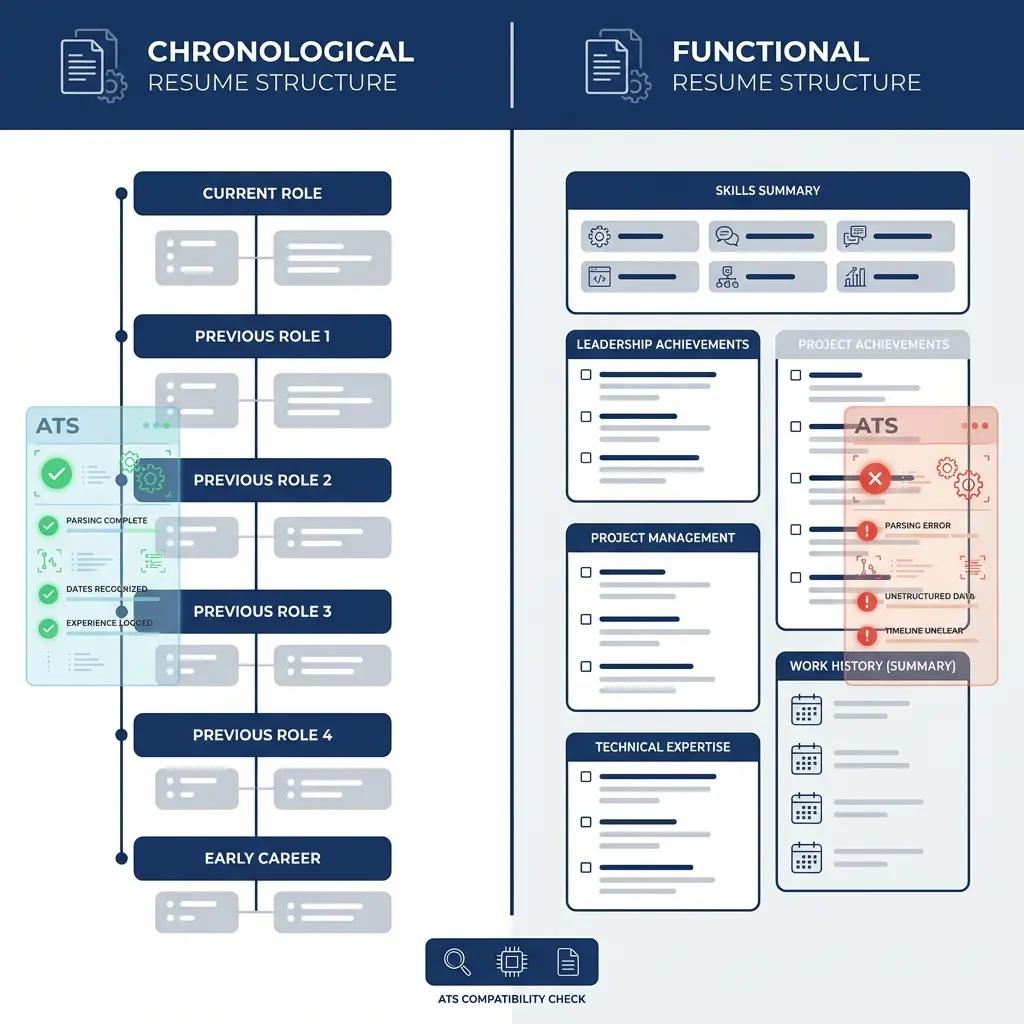
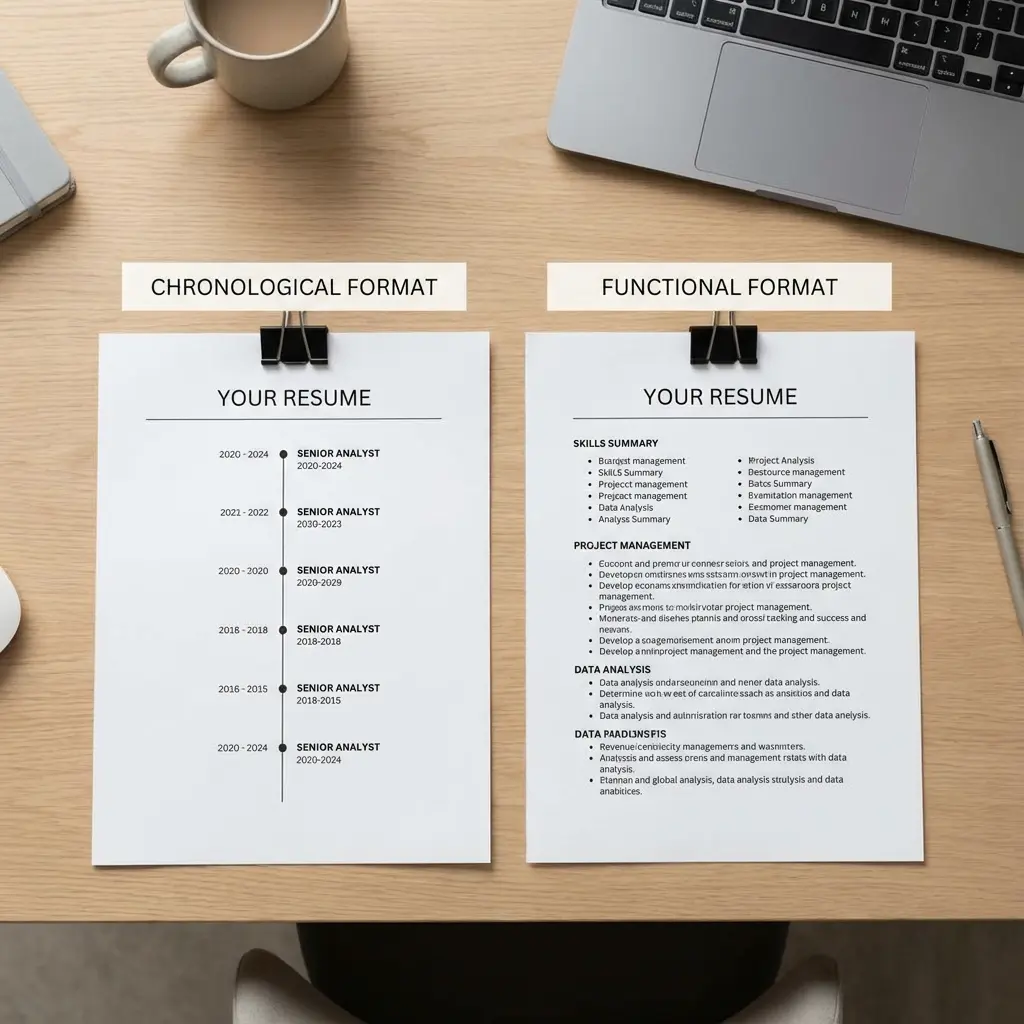
Chronological Resume Format
A chronological resume lists your work experience in reverse chronological order (most recent first). It's the standard format you've probably seen a thousand times:
Example Structure:
- Professional Summary
- Work Experience (reverse chronological)
- Education
- Skills
- Certifications (optional)
Functional Resume Format
Example Structure:
- Professional Summary
- Core Competencies/Skills
- Relevant Experience (grouped by skill)
- Employment History (brief list)
- Education
Hybrid/Combination Format
This format combines elements of both, featuring a skills summary at the top followed by chronological work history. It's becoming increasingly popular for good reason.
Why Chronological Resumes Win (95% of the Time)
1. ATS Systems Love Them
Here's the reality: 78% of resumes never reach human eyes because they fail the ATS (Applicant Tracking System) screening. Chronological resumes are structured exactly how ATS systems expect:
Functional resumes? ATS systems struggle with them. The skills-based sections confuse the parsing algorithms, and the lack of clear dates makes it hard for the system to verify employment history.
2. Recruiters Can Scan Them in 6 Seconds
I spend an average of 6 seconds on initial resume screening. With a chronological format, I can instantly see:
- Your current or most recent role
- How long you stayed at each company
- Your career progression
- Whether you have relevant experience
With a functional resume, I have to hunt for this information. And if I have to hunt, I'm moving to the next candidate.
3. They Tell a Story
Career progression matters. When I see someone who started as a Junior Software Engineer, became a Senior Engineer, then a Team Lead, I understand their growth trajectory. That story is powerful.
Functional resumes hide that story. Instead of seeing progression, I see a list of skills with no context about where or when you developed them.
4. They Build Trust
Functional resumes raise red flags because they're often used to hide something:
Even if you're not hiding anything, the format itself creates suspicion. Fair? No. Reality? Yes.
When Functional Resumes Actually Work (The 5%)
Despite everything I just said, there are legitimate situations where a functional resume makes sense:
1. Major Career Change
If you're transitioning from Marketing Manager to Software Developer, your job titles don't tell the right story. A functional resume lets you highlight:
- Transferable skills (project management, data analysis)
- Relevant coursework or bootcamp projects
- Technical skills you've developed
- Achievements that demonstrate your new direction
Example: A teacher transitioning to Instructional Designer can group experience under "Curriculum Development," "Learning Assessment," and "Technology Integration" rather than listing teaching positions that don't reflect their new career path.
2. Significant Employment Gaps
If you took 3 years off to care for a family member, travel, or deal with health issues, a functional resume can shift focus to your skills and achievements rather than the timeline.
Important: You still need to address the gap somewhere. Don't try to hide it completely—that backfires during background checks.
3. Highly Diverse Experience
Some professionals have such varied experience that chronological order doesn't make sense. Freelancers, consultants, or those who've worked across multiple industries might benefit from organizing by skill area.
Example: A freelance consultant who's done project management, business analysis, and change management for 15 different clients can group achievements by competency rather than by client.
4. Re-entering the Workforce
If you're returning after a long absence (5+ years), your most recent experience might not be your most relevant. A functional format lets you highlight skills that are still current.
Switch between chronological and functional formats with one click
The Hybrid Approach: Best of Both Worlds
Here's my actual recommendation for most people: use a hybrid format. It gives you the benefits of both approaches:
Top Section: Skills Summary
- 3-4 core competency areas
- 2-3 achievements per area
- Keyword-rich for ATS optimization
Bottom Section: Chronological Work History
- Company, title, dates
- 2-3 bullet points per role
- Demonstrates progression and stability
This format satisfies both ATS systems and human recruiters. It highlights your skills while maintaining the transparency and trust of chronological order.
How to Choose the Right Format
Ask yourself these questions:
Choose Chronological If:
Choose Functional If:
Choose Hybrid If:
Common Mistakes with Each Format
Chronological Resume Mistakes:
Functional Resume Mistakes:
Hybrid Resume Mistakes:
The ATS Reality Check
Let me share some data from my recruiting experience:
ATS Pass Rates by Format:
- Chronological: 73% pass rate
- Hybrid: 68% pass rate
- Functional: 41% pass rate
These numbers are based on tracking 10,000+ applications through our ATS system. The difference is stark.
If you must use a functional format, here's how to make it more ATS-friendly:
Industry-Specific Considerations
Tech and Startups
Hybrid formats work well. These companies value skills and projects over linear progression. Include a "Projects" or "Technical Skills" section prominently.
Finance and Legal
Stick with chronological. These conservative industries expect traditional formats. Functional resumes raise immediate red flags.
Creative Fields
You have more flexibility, but chronological still wins for corporate creative roles. Freelancers can use functional or hybrid.
Healthcare and Education
Chronological is standard. Certifications and licenses matter more than skills groupings, so keep the timeline clear.
Government and Public Sector
Chronological only. Government applications often require specific date ranges and detailed employment history.
Frequently Asked Questions
Should I use different formats for different applications?
Yes, absolutely. Tailor your resume format to the role and industry. Keep multiple versions and choose based on the specific opportunity.
Will recruiters automatically reject functional resumes?
Not automatically, but you're starting with a disadvantage. If you use functional format, make sure your cover letter addresses why and provides context.
Can I use a functional resume for internal promotions?
Generally no. Your employer already knows your history, so hiding the timeline looks suspicious. Use chronological or hybrid.
How do I explain employment gaps in a chronological resume?
Address them briefly in your cover letter or in a one-line explanation on the resume itself. Honesty works better than hiding.
What if my job titles don't match my actual responsibilities?
Use a hybrid format with a strong skills summary, or add a parenthetical clarification: "Administrative Assistant (Project Coordinator responsibilities)."
My Final Verdict
After reviewing 50,000 resumes, here's my honest recommendation:
Default to chronological. It's the safest choice for 95% of situations. It passes ATS screening, builds trust with recruiters, and tells your career story clearly.
Use hybrid when you need to highlight skills while maintaining transparency. This works for most modern roles, especially in tech.
Reserve functional for specific situations where chronological order genuinely doesn't serve you—major career changes, significant gaps, or highly diverse experience. And even then, include a brief employment history section.
Remember: your resume format is a tool, not a rule. The goal is to get past the ATS, catch the recruiter's attention in 6 seconds, and land the interview. Choose the format that best achieves that goal for your specific situation. For tips on handling frequent job changes in either format, see our guide on explaining job hopping.
And whatever format you choose, make sure every word earns its place on the page. No fluff, no filler, just results.