Cover Letter vs. Email: When to Use Which?
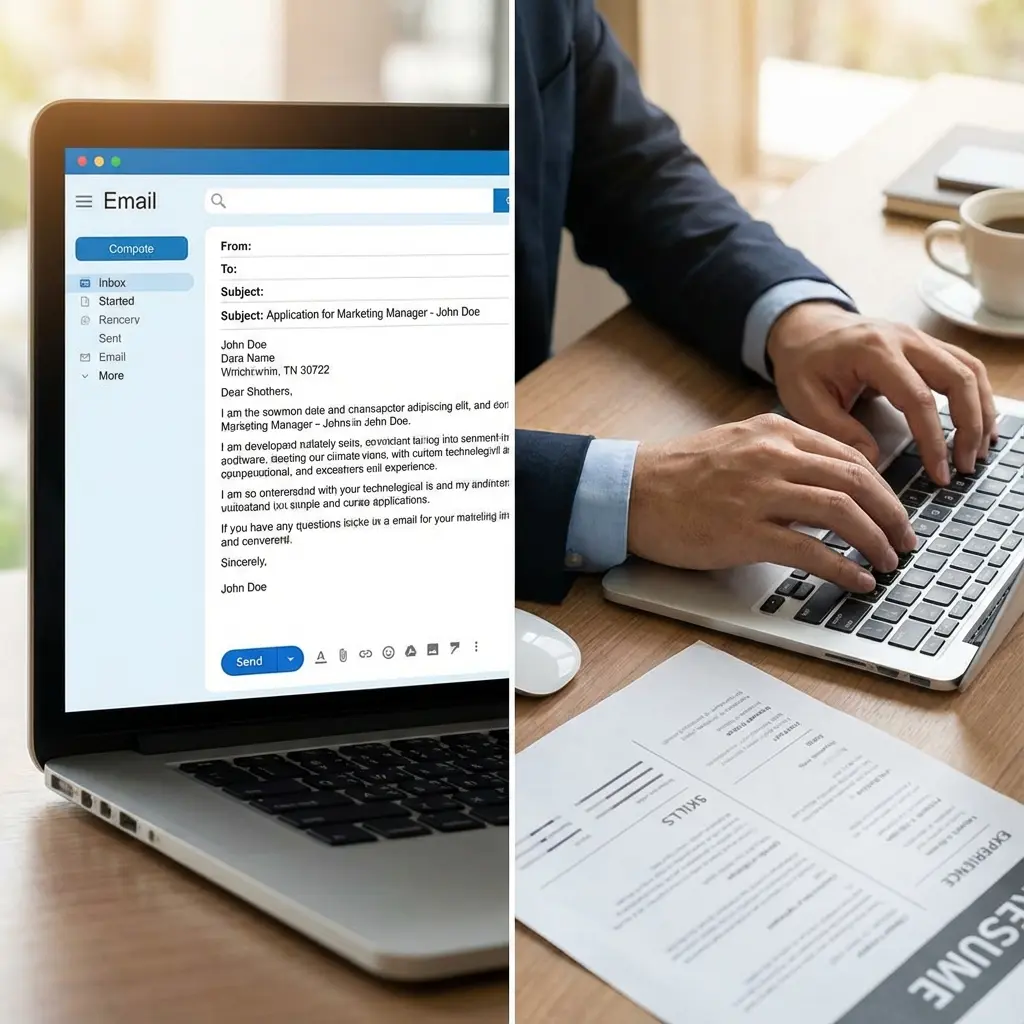
You're about to apply for a job, and you freeze. Do I write a cover letter and attach it? Or do I put my pitch in the email body? Or both?
After 15 years placing executives and reviewing thousands of applications, I can tell you: most candidates get this wrong.
The confusion is understandable. Some job postings ask for a cover letter. Some don't mention it at all. Some applications go through portals where there's no email involved.
Let me clear this up once and for all. For comprehensive strategies on writing effective cover letters and building your complete application package, see our career pitch mastery guide.
The Simple Rule
Here's the framework I teach all my clients:
If you're applying through an online portal: Attach a formal cover letter (PDF).
If you're emailing your application directly to a person: Put your pitch in the email body. No separate cover letter needed.
If you're emailing through a general inbox (jobs@company.com): Use a brief email + attach a formal cover letter.
That's it. Let's break down why.
What Is a Cover Letter? (And When Do You Need One?)
A cover letter is a formal document that:
- Introduces you to the hiring manager
- Explains why you're interested in the role
- Highlights your most relevant qualifications
- Shows your communication skills and professionalism
When you need one:
- Job posting explicitly requests a cover letter
- You're applying to a formal industry (law, finance, academia)
- You're making a career change and need to explain your pivot
- You have employment gaps or unique circumstances to address
- You're applying to a competitive role where everyone has similar qualifications
If you're new to cover letters or want to master the format, check out our comprehensive guide for templates, examples, and strategies that actually work.
What Is an Email Application?s)"
]} />
Why? Because in these scenarios, your cover letter needs to stand alone. The hiring manager might never see your email—they'll only see the documents you uploaded or attached.
Format: Professional business letter format, saved as PDF, named clearly: FirstName_LastName_CoverLetter.pdf
When to Use an Email Pitch (No Separate Cover Letter)
Put your pitch directly in the email body when:
Why? Because busy executives don't open attachments unless they have to. Your email is your cover letter.
Email Formatting:
Start with a personalized subject line, direct salutation, concise message, and professional signature.
Create a professional resume that pairs perfectly with any cover letter format
The Email Body Pitch: Template
When you're putting your pitch in the email, here's the structure that works:
Subject Line:
Application: [Job Title] - [Your Name]
or
Referred by [Name]: [Job Title] Application
Email Body:
Hi [Name],

I'm writing to apply for the [Job Title] position at [Company]. [Optional: Mention referral or connection here.]

I bring [X years] of experience in [relevant field], most recently [key achievement or role]. I'm particularly drawn to this role because [specific reason related to the company/role].

Highlights of what I can contribute:
• [Achievement 1 with metric]
• [Achievement 2 with metric]
• [Relevant skill or experience]

I've attached my resume for your review. I'd welcome the opportunity to discuss how my background aligns with your team's needs.

Thank you for your consideration.

Best regards,
[Your Name]
[Phone]
[LinkedIn URL]
Length: 150-200 words max. If they want more, they'll read your resume.
The Formal Cover Letter: Template
When you need a traditional cover letter (PDF attachment), use this structure:
Header:
[Your Name]
[Your Email] | [Your Phone]
[LinkedIn URL]

[Date]

[Hiring Manager Name]
[Company Name]
[Company Address]
Body:
- Paragraph 1: State the position and how you found it
- Paragraph 2: Your relevant experience and key achievements (with metrics)
- Paragraph 3: Why you're interested in this company specifically
- Paragraph 4: Call to action and thank you
Length: 250-400 words. One page maximum.
Tone: Professional but not stiff. Show personality while maintaining formality.
What About Both?
Sometimes you'll email a person and need to attach a cover letter (like when emailing HR at a large corporation).
In that case:
Email body: Keep it short and professional.
Hi [Name],

I'm applying for the [Job Title] position. Please find my resume and cover letter attached.

I'm excited about the opportunity to contribute to [Company] and would welcome the chance to discuss my qualifications further.

Thank you for your consideration.

Best regards,
[Your Name]
Attached cover letter: Full formal letter with all the details.
Don't repeat the same content in both. The email is a brief intro; the cover letter is the full pitch.
Common Mistakes to Avoid
I see these errors constantly:
Industry-Specific Considerations
Tech/Startups: Email pitch preferred. Keep it casual and concise.
Finance/Law/Consulting: Formal cover letter expected. Follow traditional format.
Creative Industries: Email pitch with a link to your portfolio. Show personality.
Government/Academia: Formal cover letter required. Follow all instructions precisely.
Healthcare: Depends on the role. Clinical = formal. Admin = either works.
The Real Secret
Here's what most career advice won't tell you: the format matters far less than the content.
I've hired candidates who sent a two-sentence email with a killer resume. I've passed on candidates who sent a perfectly formatted cover letter that said nothing compelling. For templates and examples that work, see our cover letter examples and templates guide.
What actually matters:
Whether that's in an email or a PDF is secondary.
Quick Decision Tree
Still not sure? Ask yourself:
- Is there a specific person's email? → Email pitch
- Is it a general inbox or portal? → Formal cover letter
- Did they explicitly ask for a cover letter? → Formal cover letter
- Is it a casual/startup environment? → Email pitch
- When in doubt? → Email pitch + formal cover letter attached
Final Advice
The goal isn't to follow rules perfectly. The goal is to make it easy for the hiring manager to see your value.
Choose the format that best serves that goal. And remember: a strong email pitch beats a mediocre formal cover letter every single time.
Now stop overthinking it and hit send.
Real Examples That Worked
Example 1: Email Pitch (Got Interview)
Subject: Application: Senior Designer - Sarah Martinez
Body: Hi Michael,
I'm writing to apply for the Senior Designer position at Acme Design. I was referred by Jane Smith, who thought my background in fintech UX would be a strong fit.
I bring 6 years of product design experience, most recently leading the redesign of PayCorp's mobile app (2M+ users). Key achievements: • Increased user engagement by 45% through streamlined onboarding • Reduced support tickets by 30% with intuitive UI improvements • Led design system adoption across 3 product teams
I'm particularly drawn to Acme's focus on accessible design—it aligns perfectly with my passion for inclusive user experiences.
Resume attached. I'd love to discuss how my background could contribute to your team.
Best, Sarah Martinez 415-555-0123 | linkedin.com/in/sarahmartinez
Why it worked: Specific achievements, metrics, clear value proposition, personal connection.
Example 2: Formal Cover Letter (Got Offer)
[Used for traditional law firm application]
Opening paragraph: "I am writing to apply for the Associate Attorney position at Smith & Associates, as advertised on your firm's website. With three years of litigation experience and a track record of successful case outcomes, I am confident I can contribute meaningfully to your practice."
Body paragraphs:
- Specific case wins with outcomes
- Relevant skills (research, writing, client management)
- Why this firm specifically
Closing: "I would welcome the opportunity to discuss how my background aligns with your firm's needs. Thank you for your consideration."
Why it worked: Professional tone, specific achievements, traditional format for traditional industry.
Troubleshooting Common Scenarios
Scenario 1: "The Application Portal Has a Cover Letter Field"
Solution: Write a brief version (150-200 words) that hits key points. Save the full pitch for your resume.
Scenario 2: "I'm Applying Through LinkedIn Easy Apply"
Solution: No cover letter needed. Make sure your LinkedIn profile is strong—that's what they'll review.
Scenario 3: "The Posting Says 'Cover Letter Optional'"
Solution: Include one if:
- You're changing careers (need to explain the transition)
- You have a gap in employment (need to address it)
- You're relocating (need to show commitment)
Skip it if you're a strong match and your resume speaks for itself.
Scenario 4: "I'm Networking My Way In"
Solution: Email pitch only. Keep it conversational. Mention the mutual connection prominently.
The 5-Minute Cover Letter Test
Before you send, ask yourself:
If you answer "no" to more than 2, revise.
Industry-Specific Guidance
Different industries have different expectations:
Tech Startups
Format: Email pitch
Tone: Casual, show personality
Length: 100-150 words max
What to include: GitHub/portfolio link, specific tech stack
Example: "Hey Sarah, I'm reaching out about the Full-Stack Engineer role. I've been building React apps for 3 years and recently shipped a SaaS product that hit 10K users in 6 months (link to demo). Your focus on developer experience really resonates—I'm obsessed with clean code and great UX. Would love to chat about how I could contribute to your team."
Corporate/Fortune 500
Format: Formal cover letter (PDF attachment)
Tone: Professional, structured
Length: 300-400 words
What to include: Specific role requirements, company research
Example opening: "I am writing to express my interest in the Senior Marketing Manager position at [Company], as advertised on your careers page. With eight years of B2B marketing experience and a proven track record of driving $10M+ in pipeline, I am confident I can contribute meaningfully to your team's objectives."
Creative Agencies
Format: Email pitch with portfolio link
Tone: Show your voice, be memorable
Length: 150-200 words
What to include: Best work samples, relevant clients
Example: "I design brands that people actually remember. Over the past 5 years, I've worked with clients like Nike, Spotify, and a bunch of scrappy startups you've probably never heard of (but should). My work has been featured in Communication Arts and won 3 ADDYs. I'm reaching out because your recent rebrand for [Client] was brilliant—exactly the kind of work I want to be doing. Portfolio attached."
Common Cover Letter Mistakes (And How to Fix Them)
Better approaches:
Instead of: "I am writing to apply for the Marketing Manager position..."
Try: "When I saw your job posting for a Marketing Manager, I immediately thought of the campaign I ran last year that increased conversions by 47%..."
Instead of: "I have 5 years of experience in marketing..."
Try: "In my current role at TechCorp, I've built and scaled a content program from zero to 100K monthly readers..."
Final Checklist
For Email Pitches:
Make sure your email signature includes your phone number, LinkedIn URL, and any relevant portfolio links.
For Formal Cover Letters:
Your application is ready when all boxes are checked.