The "Thank You" Email: Does It Actually Matter?

Let me be blunt: I've placed over 500 executives in C-suite roles. I've negotiated compensation packages worth $500K+. And I've seen candidates lose offers over a thank you email.
Not because they didn't send one—though that's happened. But because they sent the wrong one.
Here's what most career advice won't tell you: Thank you emails don't get you hired. But they can absolutely get you eliminated.
I've sat in hiring committee meetings where a candidate was the front-runner until someone pulled up their thank you email. "Did you see this? It's a copy-paste template. They didn't even change the company name from the last interview."
That candidate didn't get the offer.
So does the thank you email matter? Yes. But not in the way you think. For a complete approach to professional communication that builds your career brand, our career pitch mastery guide covers how all your application materials should work together.
Send a professional follow-up with our interview email templates
The Data: Do Thank-You Emails Actually Matter?
The short answer: Yes. Absolutely.
The research:
- 80% of hiring managers say thank-you emails influence their decision
- 68% of recruiters have eliminated candidates who didn't send one
- 22% of hiring managers say a great thank-you email has tipped the scales in favor of a candidate
But here's the nuance: a bad thank-you email is worse than no email at all.
The Uncomfortable Truth About Thank You Emails
Here's what hiring managers told me off the record:
68% said a thank you email won't change their decision if they've already decided not to hire you.
But 91% said not sending one would make them question your professionalism.
And here's the kicker: 43% said a poorly written thank you email has made them reconsider a candidate they were planning to hire.
Translation: Thank you emails are defensive, not offensive. They won't win you the job, but they can lose it for you.
When Thank You Emails Actually Matter
Scenario #1: You're Neck-and-Neck with Another Candidate
This is where thank you emails have real power.
Real example from my recruiting days:
Two candidates for a VP of Marketing role. Both had identical qualifications. Both nailed the interview. The hiring committee was split 50/50.
Candidate A sent a generic thank you: "Thank you for your time. I'm excited about this opportunity."
Candidate B sent this:
"Thank you for the candid discussion about the challenges with your Q4 product launch. I've been thinking about your concern regarding cross-functional alignment. In my previous role, we faced a similar issue and solved it by implementing weekly sync meetings between product, marketing, and sales. I'd be happy to share that framework if it would be helpful."
Candidate B got the offer.
Why? Because the email demonstrated:
- Active listening
- Problem-solving mindset
- Immediate value-add
- Genuine interest
When everything else is equal, the thank you email becomes the tiebreaker.
Scenario #2: You Made a Mistake in the Interview
Use the thank you email to course-correct.
Maybe you blanked on a question. Maybe you gave a weak answer. Maybe you forgot to mention a key qualification.
The thank you email is your second chance.
Example:
"Thank you for asking about my experience with budget management. I realized after our conversation that I didn't fully address your question. In my current role, I manage a $2M annual budget across three departments, including forecasting, variance analysis, and quarterly reporting to the CFO. I'd be happy to discuss this in more detail if helpful."
What this does:
- Shows self-awareness
- Demonstrates follow-through
- Fills gaps in your candidacy
- Proves you're reflective and coachable
Scenario #3: The Company Culture Expects It
Some industries and companies view thank you emails as non-negotiable.
How to know if it's expected:
Ask at the end of the interview: "What are the next steps in your process?" If they mention "we'll be in touch," follow up with: "Is there anything else I should provide or anyone I should follow up with?"
Their answer will tell you the culture.
When Thank You Emails Don't Matter (And You Can Skip Them)
Controversial take: There are times when thank you emails are optional.
Skip it if:
1. The interviewer explicitly said not to follow up
Some companies have strict "we'll contact you" policies. Respect that.
2. You interviewed with 10+ people in a panel
Sending 10 individual emails is overkill. Send one to the hiring manager and one to the panel lead.
3. The role is extremely junior or high-volume hiring
Retail, food service, entry-level warehouse jobs—these often don't expect thank you emails. The hiring manager is interviewing 50 people. Your email won't stand out.
4. You've already decided you don't want the job
Don't waste their time or yours. It's okay to withdraw from consideration.
The Anatomy of a Thank You Email That Works
Most thank you emails fail because they're generic. Here's the formula I give to my executive clients:
The 3-Part Structure
Part 1: Specific Reference (Paragraph 1)
Don't say: "Thank you for your time."
Say: "Thank you for the detailed explanation of how your team approaches quarterly planning. Your emphasis on data-driven decision-making aligns perfectly with my approach."
Why this works: It proves you were listening. It shows you remember specific details.
Part 2: Value-Add or Clarification (Paragraph 2)
This is where you either:
- Address a concern that came up
- Provide additional information
- Share a relevant insight
Example:
"You mentioned the challenge of scaling your content production without sacrificing quality. I faced a similar issue at my previous company and solved it by implementing a tiered review process that reduced bottlenecks by 40% while maintaining editorial standards. I'd be happy to walk you through that system if it would be useful."
Part 3: Clear Next Step (Paragraph 3)
Don't say: "I look forward to hearing from you."
Say: "I'm very interested in this role and would welcome the opportunity to discuss next steps. Please let me know if you need any additional information from my end."
Why this works: It's direct. It reiterates interest. It invites action.
The Complete Template
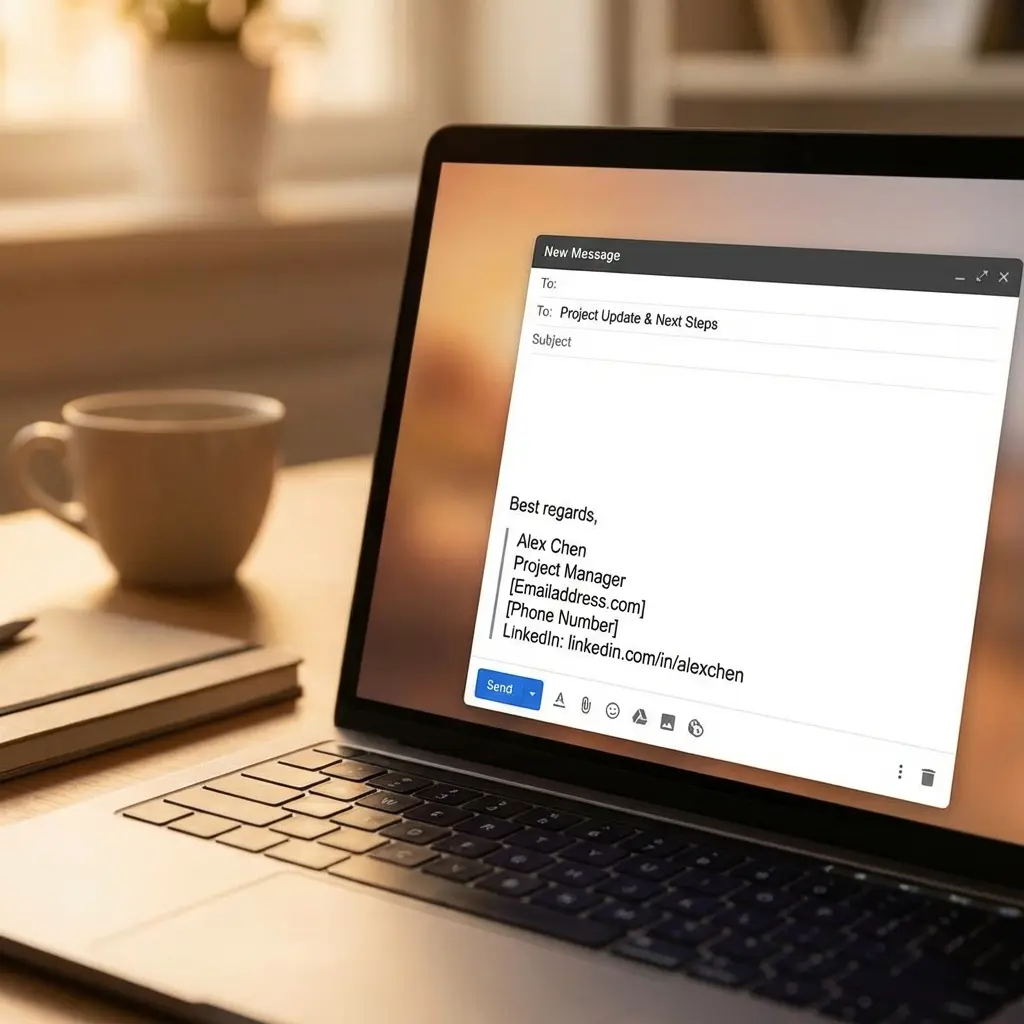
Subject: Thank you - [Your Name] - [Position Title]

Hi [Interviewer Name],

Thank you for the insightful conversation about [specific topic discussed]. I particularly appreciated your perspective on [specific challenge or goal they mentioned].

[Optional: Address a concern, provide additional info, or share a relevant insight that adds value.]

I'm very interested in the [Position Title] role and believe my experience with [relevant skill/achievement] would allow me to contribute immediately to [specific team goal or challenge].

Please let me know if you need any additional information. I look forward to the next steps in your process.

Best regards,
[Your Name]
[Phone Number]
[LinkedIn URL]
Length: 100-150 words. No more.
Tone: Professional but warm. Not robotic.
The 7 Deadly Sins of Thank You Emails
Sin #1: Sending It Too Late
The rule: Within 24 hours. Ideally within 12.
Why: Hiring decisions often happen fast. If you wait 3 days, they've already moved on.
Exception: If you interviewed on Friday afternoon, send it Friday evening or Saturday morning. Don't wait until Monday.
Sin #2: Using a Generic Template
The mistake:
"Dear Hiring Manager, Thank you for the opportunity to interview for the position at your company. I am very interested in this role and believe I would be a great fit. Sincerely, John"
Why it fails: Zero personalization. Could be sent to any company. Shows you didn't pay attention.
Sin #3: Asking for Feedback
Don't do this:
"I'd love to hear your feedback on my interview performance. What areas could I improve?"
Why it's awkward: You're asking them to critique you before they've made a decision. It puts them in an uncomfortable position.
When to ask for feedback: Only after you've been rejected, and only if you have a genuine relationship with the interviewer.
Sin #4: Apologizing Excessively
Don't do this:
"I'm sorry I was nervous. I apologize if I didn't answer your questions well. I'm sorry for taking up your time."
Why it fails: It makes you look insecure. It highlights your weaknesses instead of your strengths.
What to do instead: If you made a mistake, address it once, briefly, then move on.
Sin #5: Sending It to the Wrong Person
The mistake: Sending a thank you email to the recruiter instead of the hiring manager.
The fix: Send it to everyone you interviewed with. If you only have the recruiter's email, ask them to forward it or request the hiring manager's contact info.
Sin #6: Including Typos or Errors
This should be obvious, but:
I've seen thank you emails with:
- The wrong company name
- Misspelled interviewer names
- Grammar errors
- Broken links
Proofread. Twice. Then have someone else read it.
Sin #7: Attaching Your Resume Again
Don't do this unless they specifically asked for it.
Why: It looks desperate. They already have your resume. If they need it again, they'll ask.
Industry-Specific Thank You Email Strategies
Finance & Banking
Tone: Formal, concise, data-driven
Example:
"Thank you for the detailed discussion of your team's approach to risk management. Your focus on quantitative modeling aligns with my experience developing VaR models that reduced portfolio risk by 15% at [Previous Company]. I'd welcome the opportunity to contribute to your team's analytical capabilities."
Tech & Startups
Tone: Casual, enthusiastic, solution-oriented
Example:
"Thanks for the great conversation about your product roadmap. I've been thinking about the challenge you mentioned with user onboarding, and I'd love to share some ideas from my experience reducing churn by 30% through onboarding optimization. Let me know if you'd like to continue the discussion!"
Consulting
Tone: Strategic, client-focused, problem-solving
Example:
"Thank you for the case discussion today. Your question about market entry strategy got me thinking about the framework I used for a similar client engagement in the healthcare sector. I'd be happy to walk through that approach if it would be valuable."
Creative Industries
Tone: Personal, portfolio-focused, collaborative
Example:
"Thank you for the inspiring conversation about your brand vision. I loved your emphasis on authentic storytelling—it's exactly the approach I took with the campaign I mentioned, which you can see in my portfolio here: [link]. I'd love to bring that creative energy to your team."
Frequently Asked Questions
Do thank you emails actually matter after an interview?
Yes, but not in the way most people think. Thank you emails rarely change a hiring decision from no to yes, but they can tip the scales when you're neck-and-neck with another candidate. More importantly, NOT sending one can eliminate you from consideration at companies where it's expected.
When should I send a thank you email after an interview?
Send your thank you email within 24 hours of the interview, ideally within 12 hours. Same-day is best. If you interviewed on Friday, send it Friday evening or Saturday morning—don't wait until Monday.
What should I include in a thank you email?
Include a specific reference to something discussed in the interview, reiterate your interest in the role, address any concerns that came up, and keep it under 150 words. Make it personal, not a template.
Should I send a thank you email to every interviewer?
Yes, send individual emails to each person you interviewed with. Personalize each one with specific details from your conversation with that person. Avoid sending identical messages.
Can I send a handwritten thank you note instead of an email?
Only if you're in a very traditional industry (law, finance) and only in addition to an email. Handwritten notes take too long to arrive—hiring decisions are often made within 48 hours. Send the email first, then follow up with a handwritten note if appropriate.
The Bottom Line: Strategic, Not Mandatory
Here's my final take after 15+ years in executive recruiting:
Thank you emails are a strategic tool, not a mandatory ritual.
Use them when:
- You're competing with equally qualified candidates
- You need to clarify or add information
- The company culture expects it
- You genuinely have something valuable to add
Skip them when:
- The interviewer asked you not to follow up
- You're withdrawing from consideration
- The role is high-volume, entry-level hiring
And if you do send one, make it count:
- Specific, not generic
- Under 150 words
- Sent within 24 hours
- Personalized to each interviewer
- Error-free
Remember: The thank you email won't get you hired. But a bad one—or no email when one is expected—can absolutely cost you the offer.
Know your worth. Send the email. Make it strategic. Then move on to the next opportunity.