How to Write a Goodbye Email When Leaving Your Job
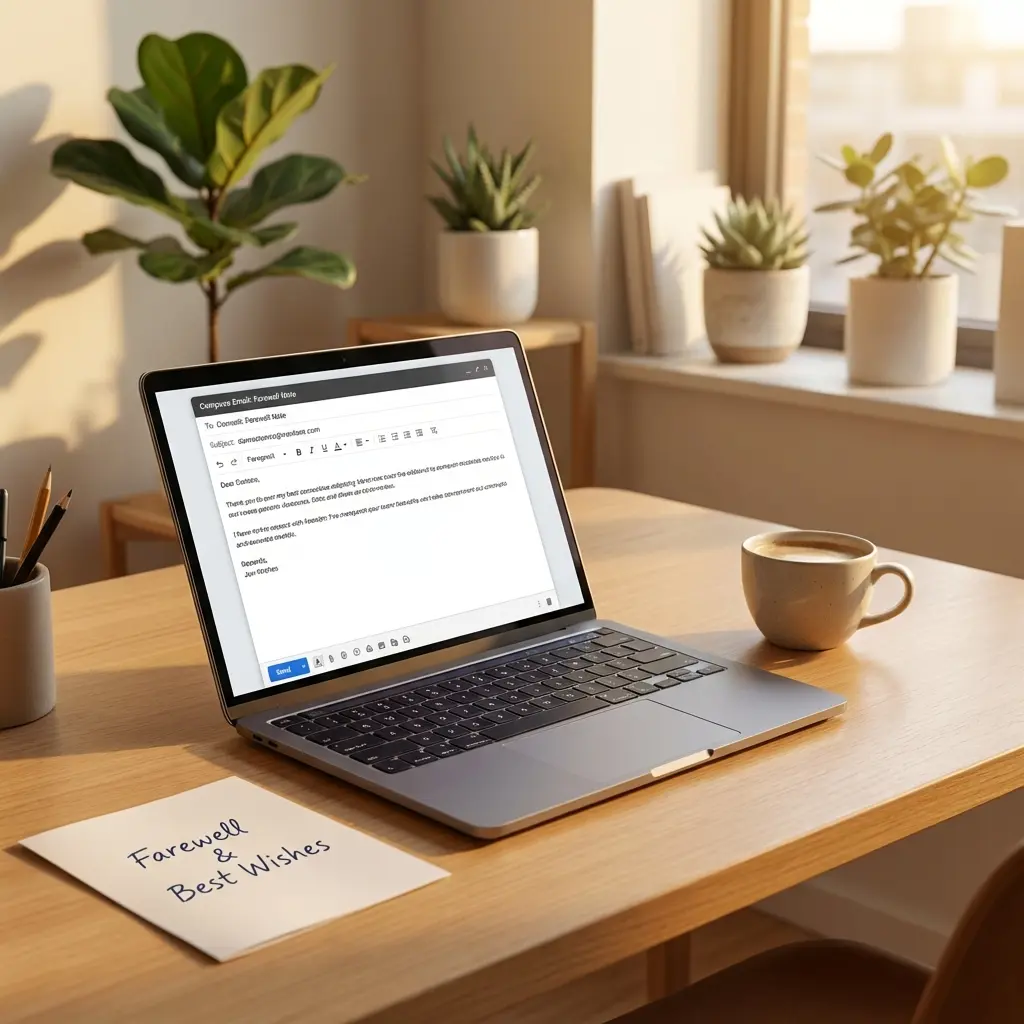
Your last day at a job is more important than you think. The goodbye email you send isn't just a formality - it's your final impression, your networking foundation, and potentially your bridge to future opportunities.
I've coached hundreds of professionals through career transitions, and I've seen how a well-crafted farewell email can lead to job referrals, recommendations, and lasting professional relationships years later.
Let me show you exactly how to write a goodbye email that leaves the door open and keeps your network strong.
Why the Goodbye Email Matters
You might think: "I'm leaving. Who cares about an email?"
The reality: Your goodbye email is the last impression you leave. For comprehensive strategies on building your professional brand across all communication touchpoints, see our career pitch mastery guide. It affects:
- References: These people might be your references for years
- Network: You'll cross paths again (smaller industry than you think)
- Reputation: How you leave defines how you're remembered
- Opportunities: Former colleagues become clients, partners, or hiring managers
Before you send that goodbye email, make sure you're leaving on the best possible terms. And if you're moving to a new role, ensure your for future opportunities—you never know when your network will come through with the perfect referral.
The Goodbye Email Template That Works
Here's what most people don't realize: your professional network is your most valuable career asset. The relationships you build at each job compound over time.
That colleague who's an individual contributor today? They might be a hiring manager in three years. Your manager might move to your dream company. The intern you mentored could become a founder who needs your expertise.
Your goodbye email is your last chance to:
I've personally received job opportunities, client referrals, and speaking invitations from people I worked with years ago - all because I took the time to write a thoughtful goodbye email.
When to Send Your Goodbye Email
Timing matters more than you think.
The Ideal Timeline
Best time: Morning of your last day (around 9-10 AM)
Why: It gives people time to respond while you're still available, but doesn't drag out the goodbye process over multiple days.
Alternative: Day before your last day (afternoon)
Why: Gives people advance notice if they want to say goodbye in person or grab coffee.
Who to Tell First
Before sending any goodbye email:
Never let your team find out you're leaving through a mass email. That's a relationship killer.
What to Include in Your Goodbye Email
Every effective goodbye email has these core elements:
1. Clear Subject Line
Keep it simple and professional:
Avoid overly casual ("Peace out!") or dramatic ("End of an Era") subject lines.
2. Expression of Gratitude
Start with genuine appreciation:
- Thank the team for the experience
- Mention specific things you learned
- Acknowledge people who helped you grow
- Keep it sincere, not generic
3. Brief Transition Information
You can optionally mention:
- That you're moving to a new opportunity
- Your last day (if not obvious)
- Who will take over your responsibilities (if relevant)
What NOT to include:
- Complaints about the company
- Reasons you're leaving (if negative)
- Detailed information about your new role (unless asked)
4. Personal Contact Information
This is critical. Include:
- Personal email address
- LinkedIn profile URL
- Phone number (optional)
- Personal website or portfolio (if relevant)
Pro tip: Create a simple email signature with this information so people can easily save it.
5. Well Wishes for the Future
End on a positive note:
- Express confidence in the team's success
- Wish everyone well in their careers
- Invite people to stay in touch
- Keep it warm but professional
Download our professional email templates
Goodbye Email Templates
Here are proven templates for different situations:
Template 1: General Team Goodbye
Use when: Sending to your entire team or department
Subject: Farewell and Thank You
Body:
Hi team,
Today is my last day at [Company], and I wanted to take a moment to say thank you.
Working with all of you has been one of the highlights of my career. I've learned so much from this team - from [specific skill or project] to [another specific example]. I'm grateful for the support, collaboration, and friendship you've shown me.
I'm moving on to a new opportunity, but I hope we'll stay in touch. Please feel free to connect with me:
Personal email: [your.email@gmail.com]
LinkedIn: [linkedin.com/in/yourprofile]I have no doubt this team will continue to do amazing things. Thank you again for everything, and I wish you all the best.
Warmly,
[Your Name]
Word count: ~120 words
Tone: Professional, warm, grateful
Template 2: Close Colleagues (Individual Email)
Use when: Writing to mentors, close collaborators, or friends
Subject: Thank You and Let's Stay in Touch
Body:
Hi [Name],
As you know, today is my last day, and I couldn't leave without reaching out personally.
Working with you has been one of the best parts of my time at [Company]. [Specific example: "Your mentorship on the Q3 project taught me more about stakeholder management than any course could have" or "Our brainstorming sessions always pushed me to think differently"].
I'm excited about my next chapter, but I'm going to miss our [weekly 1:1s/coffee chats/project collaborations]. Let's make sure we stay in touch - I'd love to grab coffee or jump on a call in a few weeks to catch up.
Personal email: [your.email@gmail.com]
LinkedIn: [linkedin.com/in/yourprofile]
Phone: [optional]Thank you for everything. I'm rooting for your continued success!
Best,
[Your Name]
Word count: ~140 words
Tone: Personal, appreciative, relationship-focused
Template 3: Brief and Professional
Use when: You had a short tenure or formal workplace culture
Subject: Moving On - Thank You
Body:
Hello everyone,
I'm writing to let you know that today is my last day at [Company]. I've accepted a new opportunity and am excited for the next step in my career.
Thank you for the experience and for making my time here valuable. I've appreciated working with such a talented team.
If you'd like to stay in touch, please feel free to connect:
Email: [your.email@gmail.com]
LinkedIn: [linkedin.com/in/yourprofile]Best wishes for continued success.
Regards,
[Your Name]
Word count: ~80 words
Tone: Professional, concise, polite
Template 4: Leaving on Difficult Terms
Use when: You're leaving due to conflict or negative circumstances
Subject: Farewell
Body:
Hi team,
Today is my last day at [Company]. I wanted to reach out to say thank you for the opportunity to work together.
I've learned a great deal during my time here and appreciate the experience. I wish everyone the best moving forward.
Please feel free to stay in touch:
Email: [your.email@gmail.com]
LinkedIn: [linkedin.com/in/yourprofile]Best,
[Your Name]
Word count: ~60 words
Tone: Neutral, brief, professional
Key principle: Even if you're leaving on bad terms, take the high road. You never know when these relationships might matter.
What Never to Include
These elements will damage your professional reputation:
Remember: Emails are permanent and forwardable. Write nothing you wouldn't want your future employer to see.
Special Situations
Leaving After a Short Time (Less Than 6 Months)
Keep it even briefer and focus on gratitude:
"Although my time here was brief, I appreciated the opportunity to work with such a talented team. Thank you for welcoming me and for the experience."
Leaving for a Competitor
Don't mention where you're going:
"I'm moving on to pursue a new opportunity. I'm grateful for my time here and wish everyone continued success."
Laid Off or Terminated
You can still send a professional goodbye:
"My time at [Company] has come to an end. I'm grateful for the relationships I've built and the skills I've developed. I'm excited about what's next and hope we'll stay in touch."
Retiring
Celebrate the milestone while staying humble:
"After [X years] in this industry and [Y years] at [Company], I'm retiring. It's been an incredible journey, and I'm grateful to have worked with such exceptional people. Thank you for making these years memorable."
After You Send: Follow-Up Etiquette
Respond to Replies
People will respond to your goodbye email. Here's how to handle it:
Connect on LinkedIn
Within a week of leaving:
- Send LinkedIn connection requests to colleagues you want to maintain relationships with
- Personalize each request: "Great working with you at [Company]! Let's stay connected."
- Endorse skills for people who helped you
- Write recommendations for mentors or close colleagues (they'll often reciprocate)
The 30-Day Follow-Up
One month after leaving, reach out to 3-5 key contacts:
"Hi [Name], it's been a month since I left [Company] and I wanted to check in. How are things going with [project/team/initiative]? I'd love to grab coffee and catch up if you're available."
This keeps the relationship warm and shows you genuinely care.
Common Mistakes to Avoid
Mistake 1: Waiting Until the Last Hour
Don't send your goodbye email at 4:45 PM on your last day. People won't have time to respond, and it looks like an afterthought.
Instead: Send it in the morning so people can reply and you can respond before leaving.
Mistake 2: Making It All About You
Your goodbye email should focus on gratitude and the team, not your achievements or new opportunity.
Instead of: "I'm so excited to start my new role as Senior Director at [Company]!"
Say: "I'm grateful for the experience here and excited for what's next."
Mistake 3: Forgetting Contact Information
The whole point is staying in touch. Don't forget to include your personal email and LinkedIn.
Mistake 4: Being Too Casual
Even if your workplace is casual, your goodbye email should be professional. This is a permanent record.
Avoid: "Peace out, y'all! It's been real. Hit me up sometime!"
Use: "Thank you for everything. Let's stay in touch!"
Mistake 5: Sending Only a Group Email
Close colleagues, mentors, and people who significantly impacted your career deserve individual, personalized emails.
The Long-Term Impact
Here's what I've seen happen when people write thoughtful goodbye emails:
Real examples from my coaching clients:
- A software engineer who left a startup got recruited by a former colleague three years later for a role that paid 40% more
- A marketing manager who maintained relationships received freelance clients worth $50K+ from former coworkers
- A project manager who sent personalized goodbyes got a glowing recommendation from her old boss that landed her dream job
- An analyst who stayed in touch was invited to speak at industry conferences by former teammates
Your professional network compounds over time. The goodbye email is your investment in that network.
Final Thoughts
Leaving a job is a transition, not an ending. The relationships you've built are valuable assets that can benefit your career for decades.
Take the time to write a thoughtful goodbye email. Express genuine gratitude. Provide your contact information. Leave the door open.
You never know when that colleague, that manager, or that intern will become your next opportunity, your next client, or your next reference.
Leave well. Stay connected. Your future self will thank you.